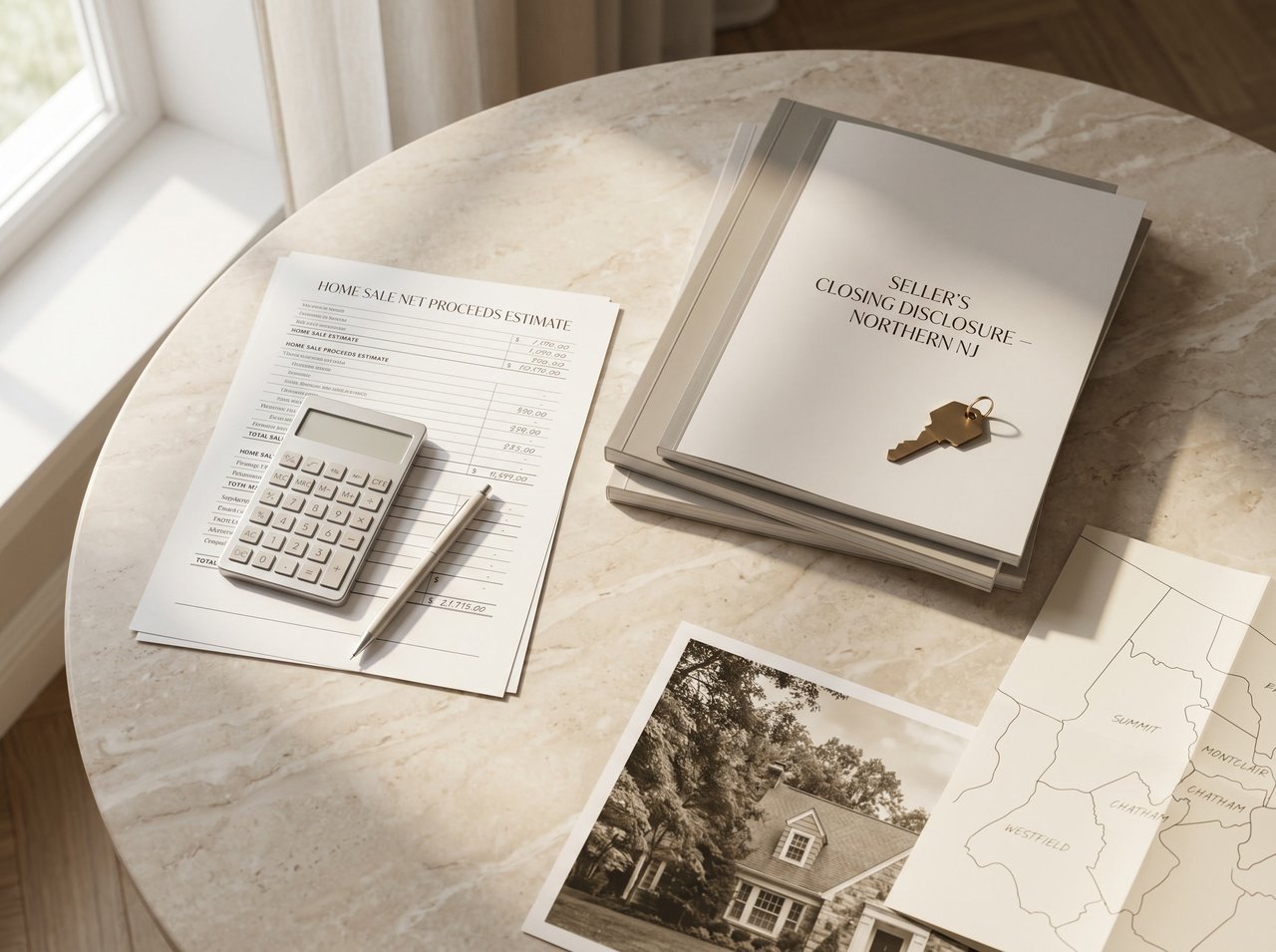
What Does It Actually Cost to Sell a Home in Northern New Jersey?
Real Estate Allison Ziefert July 7, 2026
Real Estate Allison Ziefert July 7, 2026
A seller's guide to closing costs, transfer taxes, commissions, and net proceeds for homeowners in Essex, Morris, and Union Counties
Most Northern New Jersey homeowners focus on what their home will sell for. The more useful question — and the one that determines what you actually walk away with — is what it will cost to sell it.
A reasonable planning range for seller-side expenses in New Jersey runs from roughly 5% to 9% of the sale price, depending on the home's value, condition, location, and how the transaction is negotiated. For homes selling above $2 million, total costs can push higher depending on the Graduated Percent Fee tier that applies. For a home in the $800,000 to $1.5 million range — common across Maplewood, Montclair, Chatham, and Westfield — that 5%–9% range is a meaningful number worth understanding before you list.
Here's what goes into it.
Commission structures are negotiable and have evolved following the 2024 NAR practice changes. On the listing side, sellers discuss commission arrangements directly with their agent before signing a listing agreement. Sellers may also choose to offer compensation to a buyer's agent, though such compensation can no longer be offered through the MLS — it must be negotiated off-MLS. Total commission outlay, when both sides are compensated, commonly falls in a range of roughly 4% to 6% of the sale price, though the actual figure depends entirely on what's negotiated and should be confirmed in writing with your listing agent before proceeding.
This is typically the largest single line item in a seller's closing costs, which is why understanding what you're getting for that commission — pricing strategy, agent network, preparation guidance, negotiation skill — matters alongside the rate itself.
The New Jersey Realty Transfer Fee (RTF) is a state-imposed tax paid by the seller when property ownership transfers to a buyer. It's calculated on a graduated percentage basis tied to the sale price, and it also varies depending on the seller's age and whether the property qualifies for certain exemptions — seniors aged 62 and older, for example, may be eligible for a partial reduction.
For most standard residential transactions, the RTF works out to approximately 1% of the sale price, though the exact figure depends on the applicable tier and any exemptions. Your attorney will calculate the precise amount based on your actual transaction.
This is the most important section for sellers in Northern NJ's higher-price markets, and it reflects a significant legal change that took effect in mid-2025.
For sales over $1 million, New Jersey imposes an additional Graduated Percent Fee (GPF) — historically known as the Mansion Tax. As of contracts fully executed on or after July 10, 2025, this fee is now paid entirely by the seller, per the NJ Division of Taxation. Prior to that date, a 1% version of this fee was a buyer obligation. That is no longer the case for 2026 transactions.
Current rates, per the NJ Division of Taxation:
One detail many sellers miss: the GPF rate applies to the entire sale price, not just the amount above each threshold. A home selling for $2.2 million, for example, is taxed at 2% on the full $2.2 million — not just the $200,000 above the $2 million threshold. At $2.2 million, that's $44,000 in GPF alone, on top of the standard RTF.
This is a material seller cost in markets like Short Hills, Millburn, Livingston, and Summit where transactions routinely cross $1 million — and at higher price points, it can significantly reshape net proceeds calculations. Sellers should ask their attorney to calculate the exact GPF amount before listing, not after an offer is accepted.
Read more: If you're selling at the upper end of the market, this guide to what luxury buyers expect in Short Hills gives useful context on how purchasers at that price point think about value and positioning.
Sellers are responsible for their share of property taxes and municipal sewer charges through the actual closing date. These are calculated at closing on a prorated basis — if you close mid-year, you owe your portion of the annual bill to that point, with the buyer picking up the remainder.
Property tax levels vary considerably across Northern NJ municipalities. Towns like Montclair, Maplewood, and West Orange carry higher effective rates relative to assessed values, while some Morris County communities sit at different points on the scale. Your attorney will calculate the exact proration based on your closing date and municipal records.
Once a buyer completes due diligence inspections, negotiation over repairs or credits often follows. Sellers should budget for the possibility of concessions here — particularly in older homes where inspections are more likely to surface issues related to aging systems or deferred maintenance.
The amount varies widely. Some transactions involve no credits at all; others involve meaningful adjustments. Having a realistic picture of your home's condition before listing — ideally through a pre-listing walkthrough with your agent — helps you anticipate and manage this phase more effectively.
Read more: Want to understand what buyers are inspecting and what it costs them? This breakdown of home inspection costs across Essex, Morris, and Union Counties covers every inspection type buyers commonly run in this market.
Many New Jersey municipalities require their own inspections — typically covering smoke detectors, carbon monoxide detectors, and fire safety — before a sale can close. The inspection fee itself is usually modest, but if remediation work is required to pass, costs can vary depending on your specific municipality and what gets flagged. Budget a few hundred dollars as a baseline, with upside risk on older properties.
New Jersey residential contracts commonly include an attorney review period, and sellers typically retain their own attorney to represent them through the process — covering contract review, negotiation, title coordination, and closing. Attorney fees vary by firm and transaction complexity; get a clear scope and fee estimate from your attorney before the process begins. These range from $1,500-$2,500 or more depending on the level of service and complexity of the transaction but attorneys typically charge a flat fee to represent the sellers.
What a seller spends getting a home ready for market varies enormously by starting condition and competitive context. Common preparation investments include professional cleaning, touch-up painting, landscaping, minor repairs, and staging consultations.
In markets like Glen Ridge, Maplewood, and Montclair — where buyers arrive having toured many well-presented homes — preparation spending is a real driver of outcome, not an optional nicety. The right investments, guided by your agent, can influence both the speed of sale and the strength of offers received.
Read more: For a clear picture of how the full seller timeline fits together from prep through closing, this guide to the Millburn home sale process walks through each phase in sequence.
Any outstanding mortgage balance or home equity line of credit is paid from your proceeds at closing. Because these figures vary so much from one homeowner to another, they're typically handled separately from closing costs when estimating selling expenses. Your net proceeds are your sale price, minus all closing costs, minus your outstanding mortgage payoff — and getting a written net proceeds estimate before listing helps you plan your next move accurately.
The 2025 change making the Graduated Percent Fee a seller obligation — rather than a buyer obligation — is the most important recent development in New Jersey seller closing costs, and it's not yet widely understood. If you're selling above $1 million in any Northern NJ market, this fee needs to be part of your planning conversation before you price your home, not after you accept an offer. The difference between the 1% and 2% GPF tiers, for example, can amount to tens of thousands of dollars in additional seller-side cost on a transaction that crosses the $2 million threshold.
As of mid-2025, buyers are no longer responsible for the Mansion Tax / GPF on purchases over $1 million. That obligation now sits entirely with the seller. Buyers should confirm the specifics of their transaction with their attorney, particularly for contracts that may have been negotiated near the July 10, 2025 effective date.
The Allison Ziefert Real Estate Group provides homeowners with a complimentary seller net proceeds analysis before a home goes on the market. We'll walk through the full picture — estimated commission, Realty Transfer Fee, Graduated Percent Fee, attorney fees, municipal requirements, and any preparation costs — so you know exactly where you stand before making any decisions.
If you're considering a sale in Maplewood, South Orange, Millburn, Short Hills, Livingston, Summit, Chatham, Westfield, Morristown, or anywhere across Northern New Jersey, reach out at [email protected].
How much does it cost to sell a home in New Jersey?
Most New Jersey sellers should plan for total selling expenses in the range of roughly 5% to 9% of the sale price, covering commissions, transfer fees, attorney costs, municipal requirements, and preparation. For homes selling above $2 million, total costs can run higher depending on the applicable Graduated Percent Fee tier.
What is the New Jersey Realty Transfer Fee?
The RTF is a state-imposed tax paid by the seller at closing, calculated on a graduated basis tied to the sale price. For most standard residential transactions it works out to approximately 1% of the sale price, though the precise figure depends on applicable tiers and exemptions. Your attorney will calculate the exact amount.
What is the New Jersey Graduated Percent Fee, and who pays it?
The Graduated Percent Fee — formerly known as the Mansion Tax — applies to residential sales over $1 million. As of July 10, 2025, it is paid entirely by the seller, not the buyer. Rates range from 1% on sales between $1 million and $2 million up to 3.5% on sales above $3.5 million, and critically, the rate applies to the full sale price, not just the amount above each threshold. Sellers in Short Hills, Millburn, Summit, and similar high-value markets should have their attorney calculate this figure before listing.
Do sellers pay attorney fees in New Jersey?
Yes. New Jersey residential contracts commonly include an attorney review period, and sellers typically retain their own attorney to represent them through the transaction. Fees vary by firm and deal complexity.
What's the difference between sale price and net proceeds?
Net proceeds are what remains after subtracting all selling costs — commissions, transfer fees, Graduated Percent Fee if applicable, attorney fees, municipal charges, inspection credits, and preparation expenses — as well as your outstanding mortgage payoff from the gross sale price. A written net proceeds estimate before listing helps you plan your next move with accurate numbers.
Blog
For Northern New Jersey homeowners who want to understand what drives competitive offers, how listing prices influence buyer behavior, and what really determines a suc… Read more
Blog
For homeowners in Maplewood, South Orange, and Northern New Jersey who want to understand their property's value before selling, refinancing, or planning their next mo… Read more
Blog
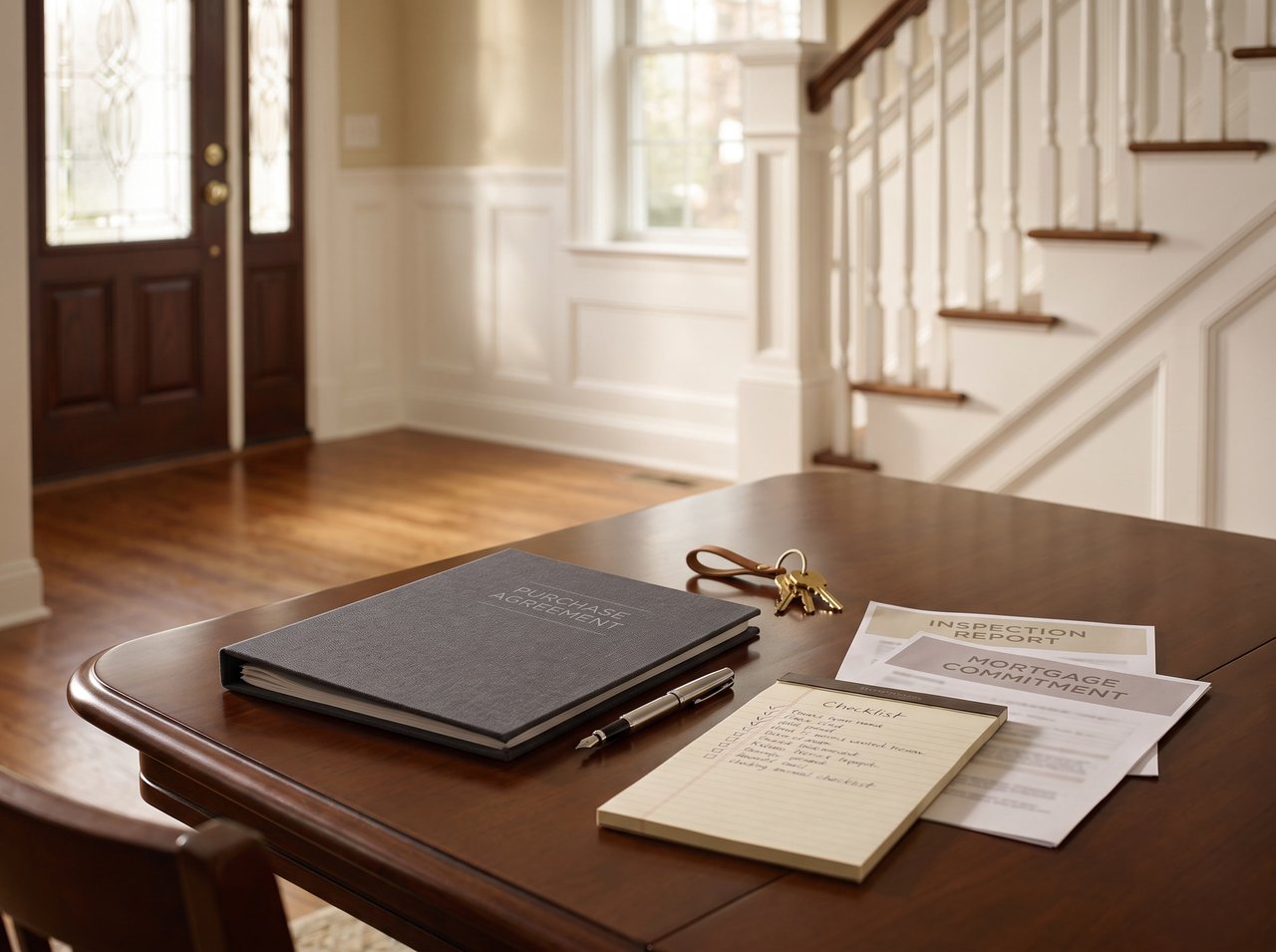
A step-by-step guide for buyers navigating the post-contract period in Essex, Morris, and Union Counties

Blog
A straight-numbers look for buyers considering a purchase in Maplewood, Montclair, Summit, and surrounding towns — and what the math actually says about timing
Home Selling
A practical guide for buyers and sellers in Maplewood, South Orange, Montclair, Summit, Westfield, Chatham, and nearby Northern New Jersey towns.
We are passionate about researching market stats, negotiating contracts, and helping our clients find and sell homes. The majority of our business comes from past clients and referrals from people who know our work.