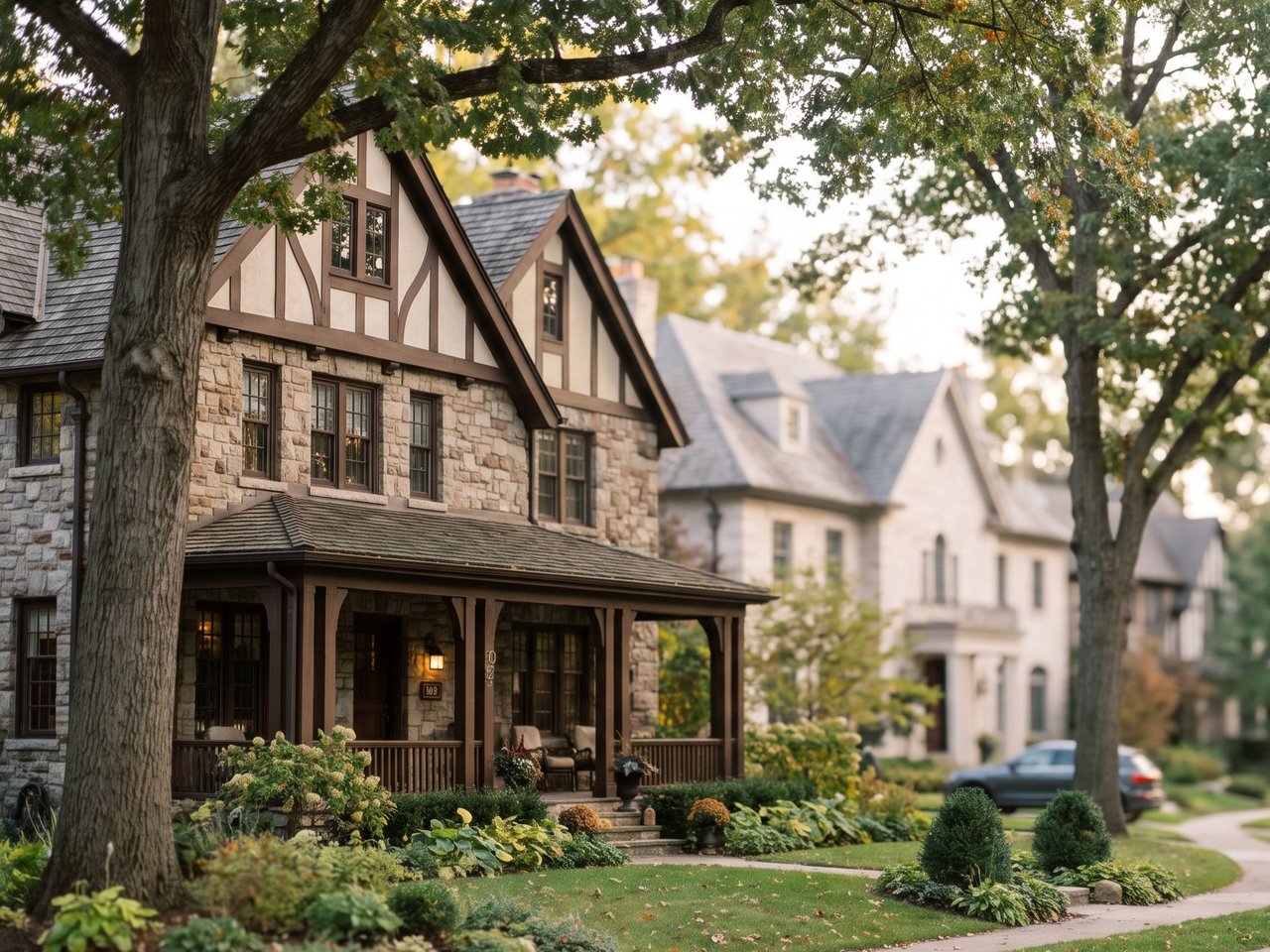
Do You Really Need 20% Down to Buy a Home in Northern NJ?
Blog Allison Ziefert July 22, 2026
Blog Allison Ziefert July 22, 2026
This article is for general informational purposes only and isn't mortgage or financial advice. Loan programs, rates, mortgage insurance, and down payment requirements vary by lender and buyer profile — always confirm specifics with a licensed mortgage professional.
Short answer: No, you don't need to hand over a full fifth of the purchase price to buy a home in Northern New Jersey. It's one of the most common — and most costly — misunderstandings buyers carry into the market.
Ask around Maplewood, South Orange, or Bloomfield and you'll hear the same assumption over and over: save a giant lump sum first, then start house hunting. That thinking has quietly talked a lot of well-qualified renters out of homeownership, sometimes for years longer than necessary. In reality, plenty of today's closings involve buyers who put down far less than that, using loan programs built specifically to open the door sooner.
Short answer: Depending on the loan program and your financial profile, qualified buyers can often get into a home with a down payment in the single digits — nowhere close to 20 percent.
Mortgage lenders serving towns like Livingston, West Orange, and Glen Ridge routinely work with buyers using low-down-payment conventional loans, government-backed programs, and other financing paths built around accessibility rather than a one-size-fits-all threshold. Worth noting: national data from the National Association of REALTORS® shows many buyers — especially repeat buyers with equity from a previous sale — are actually putting down more than 20% these days, and first-time buyer down payments have crept higher too. That doesn't mean low-down-payment financing has disappeared; it means today's market includes both cash-heavy repeat buyers and qualified borrowers using programs that require far less than 20%. The options exist even if not every buyer is using them.
For someone hoping to plant roots in Essex, Morris, or Union County, the calculation isn't one-size-fits-all. Waiting to build a larger down payment can be the right call for buyers who want lower monthly costs or plan to stay put for decades. But it can also mean more years paying rent instead of building equity, and more exposure to whatever home prices do in the meantime. The better question isn't "how much should I save" — it's "what does my specific financial picture actually require."
Read more: If you're self-employed or planning to buy with cash reserves instead of a traditional paycheck, this guide to non-traditional financing strategies walks through options buyers in Maplewood and Summit are using right now.
Short answer: Usually not by nearly as much as buyers expect.
It's easy to assume that skipping the 20 percent mark automatically triggers a steep jump in your rate and monthly bill. In practice, the gap is often narrower than people brace for. Yes, a smaller down payment can mean added mortgage insurance and sometimes a modest rate adjustment — but the actual monthly difference between, say, a 10-percent-down loan and a 20-percent-down loan frequently ends up smaller than the stress it causes buyers beforehand.
For a lot of households eyeing Westfield, Madison, or Chatham, keeping cash on hand for closing costs, renovations, or a rainy-day fund is worth more than shaving a modest amount off a monthly bill. The smarter move is looking at your full financial picture — not fixating on one percentage.
Short answer: If you put down less than 20% on a conventional loan, expect to carry private mortgage insurance (PMI) until you build enough equity — but it's temporary, not a life sentence.
According to the Consumer Financial Protection Bureau, conventional loans with a down payment under 20% generally require PMI, which protects the lender rather than the buyer. It gets added to your monthly payment, and a 20%-down loan can also come with a somewhat lower interest rate. The upside: PMI isn't permanent. Once you've paid your balance down to a set equity threshold, you can typically request that it be removed. For a lot of Northern NJ buyers, that temporary cost is a reasonable trade-off for getting into a home in Montclair or Bloomfield years sooner rather than waiting to hit 20%.
Short answer: Yes — where a home falls relative to the conforming loan limit can shape which financing options are even on the table.
Fannie Mae and Freddie Mac only purchase loans up to a set "conforming" limit each year. Nationally, that baseline sits just above $832,750 for most one-unit properties — but Essex, Morris, and Union Counties are designated FHFA high-cost areas, so the local conforming ceiling runs meaningfully higher, north of $1.2 million for a single-family home. Loans above that local threshold are considered jumbo, and jumbo lenders often ask for larger down payments, deeper cash reserves, and stronger credit profiles than conventional financing does.
That distinction matters a lot depending on where you're shopping. A buyer purchasing in Maplewood or Montclair well into seven figures can often still qualify for conventional, lower-down-payment financing, thanks to that elevated local limit. A buyer targeting a $1.8 million home in Short Hills, on the other hand, is very likely in jumbo territory, where reserves, appraisal risk, and overall financial strength tend to carry more weight with lenders — and with sellers — than the down payment percentage alone. If you're house hunting in higher-priced pockets of Millburn, Summit, or Short Hills, it's worth asking your lender early which side of that line your target price range falls on.
Short answer: It can help, but it's far from the only — or even the strongest — way to stand out in a competitive Northern NJ market.
In sought-after commuter towns like Summit, Millburn, and Short Hills, sellers weighing multiple offers do tend to feel more confident about a buyer who's putting down a larger chunk of cash; it can ease worries about financing falling through or an appraisal coming in short. But a smaller down payment doesn't have to sink your offer. Buyers today have real tools to compete, including:
Here's the thing sellers actually care about: not your monthly payment, but whether you'll close on time. A buyer offering 10 percent down with strong reserves, a fully underwritten pre-approval, and appraisal protection can look far less risky than a 20-percent-down buyer whose overall finances are shakier. The most competitive offer isn't always the one with the biggest check attached — it's the one that removes doubt.
Read more: Curious how competitive it really is out there right now? This breakdown of Maplewood's current market looks at what buyers and sellers are seeing town by town.
Whatever you put down, budget for the due-diligence side of the process too — inspections aren't optional. This local cost guide breaks down what to expect for towns across Essex, Morris, and Union Counties, including Montclair and Summit.
For buyers: Don't let an outdated rule of thumb keep you renting in Morristown, Chatham, or anywhere else in Northern Jersey. Start by talking to a lender about what you actually qualify for — you may have more purchasing power today than you think.
For homeowners weighing a move-up purchase: If you're already in Glen Ridge, Livingston, or West Orange and thinking about trading up, the same math applies to your next home. A strong offer today is built on preparation — pre-approval, reserves, and a clear financial picture — not just the size of your check.
Every buyer's situation is different, and the right down payment strategy depends on your goals, your timeline, and your comfort with monthly costs versus cash reserves. That's a conversation worth having before you start touring homes, not after you've fallen for one.
Thinking about buying in Northern New Jersey? Reach out to the Allison Ziefert Real Estate Group at [email protected] — we'll walk you through your financing options, compare down payment scenarios, and help you figure out what actually makes sense for your next move.
Do I need 20% down to buy a home in Northern NJ? No. Many buyers qualify for loan programs that accept far less than 20 percent, depending on their lender and financial profile.
Will putting down less than 20% give me a much higher interest rate? Not necessarily. The difference in rate and monthly payment is often smaller than buyers assume — it's worth comparing real numbers with a lender rather than guessing.
Can I still compete for a home in towns like Summit or Short Hills with a smaller down payment? Yes. A fully underwritten pre-approval, appraisal gap coverage, and documented reserves can make a lower-down-payment offer just as strong to a seller.
Is paying mortgage insurance always a bad move? No. It adds a monthly cost, but it's usually removable once you build enough equity — and for many buyers it's what makes buying sooner possible instead of waiting years to save 20%.
Does buying in a higher-priced town like Short Hills or Millburn change my financing options? It can. Essex, Morris, and Union Counties have an elevated local conforming loan limit thanks to their FHFA high-cost designation, but homes priced above that local ceiling still require jumbo financing, which often comes with different down payment and reserve expectations than a conventional loan.
What's the biggest mistake buyers make around down payments? Assuming they don't qualify without ever talking to a lender. The only way to know your real options is to run your specific numbers.
Blog
A mid-2026 status check for anyone buying, selling, or just curious about home values in these two Essex County communities
Blog
A practical seller's guide for homeowners in Essex, Morris, and Union Counties planning to list between September and November

Blog
For Maplewood, Montclair, Millburn, and surrounding-town residents heading to a new market — and what a great agent referral actually looks like
Blog
A mid-2026 look at what's actually driving prices, competition, and inventory in Montclair and Glen Ridge — for buyers wondering if they've missed their window and sel… Read more
Blog
A guide for buyers and sellers anywhere from Maplewood to Morristown who are staring at a thick inspection report and wondering if the deal is in trouble
We are passionate about researching market stats, negotiating contracts, and helping our clients find and sell homes. The majority of our business comes from past clients and referrals from people who know our work.