Maplewood & South Orange NJ Housing Market 2026: Mid-Year Update | NJ From A to Z
Real Estate Allison Ziefert July 22, 2026
Real Estate Allison Ziefert July 22, 2026
Market observations in this article are based on local MLS activity, public sale data, and our team's direct work with buyers and sellers in Maplewood and South Orange through mid-2026.
National real estate headlines in 2026 have managed to describe the housing market as simultaneously stalling, overheating, and frozen — sometimes within the same week. None of those narratives maps onto what we're actually watching in Maplewood and South Orange.
Halfway through the year, values in both towns sit meaningfully above where they were twelve months ago. Well-prepared homes near the train stations and village centers are still drawing multiple offers and closing above list price. What has shifted is the character of the market: fewer total transactions, fewer casual browsers, and a buyer pool that is leaner but considerably more committed.
This isn't a market cooling off. It's a market concentrating.
The purchasers touring homes in SOMA today have done their research. Most have been actively searching for months, know precisely which streets and school zones they're targeting, and have financing in order before they walk into an open house. Many are relocating from Brooklyn, Hoboken, Jersey City, or Manhattan — drawn by Midtown Direct rail access, walkable downtowns, and the architectural variety that defines so much of the housing stock here: Colonials, Tudors, Victorians, and Arts and Crafts homes that simply don't exist in newer suburban markets.
That combination explains why open houses can feel quieter than the pandemic-era crush while contracts still get signed within days. The casual lookers thinned out. The serious purchasers didn't.
A pattern we see consistently: a listing debuts on a Thursday, weekend traffic is steady rather than mobbed, and by early the following week it's under contract — often with multiple offers behind the winning one.
We field this question almost weekly: "Aren't there suddenly a lot of houses for sale?"
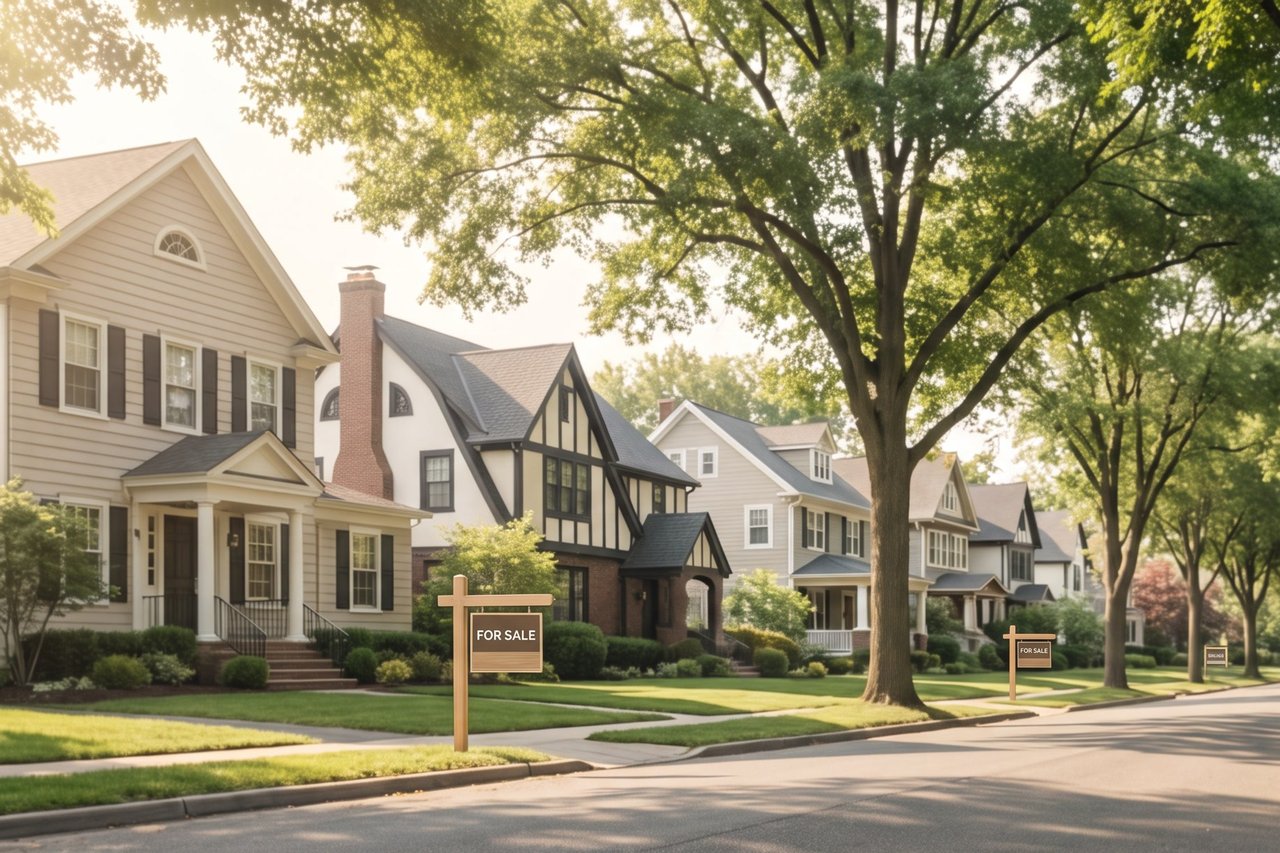
Springtime lawn signs create that impression. Local MLS activity tells a different story. Sales volume in both Maplewood and South Orange remains well below the busiest periods of the past two decades, and in many weeks active inventory in each town stays extremely limited relative to buyer demand. When the number of committed purchasers consistently outnumbers the available good options, that's a supply-constrained market — regardless of how many signs you pass on Ridgewood Road.
Several forces are keeping inventory tight across Essex County and the broader Midtown Direct corridor:
Rate lock-in. Owners who refinanced into historically low mortgage rates are understandably reluctant to trade them for current ones.
Equity comfort. Longtime residents have built substantial equity and feel little urgency to act.
The downsizer's dilemma. Selling is the easy part — finding the next home in Millburn, Madison, Chatham, or Morristown is just as competitive, which keeps many would-be sellers in place.
Community roots. Schools, local businesses, block parties, houses of worship. The quiet force behind low turnover is simply that residents who could move often decide they'd rather stay.
Read more: Planning a sale in Millburn and wondering how the full process fits together? This guide to the Millburn home sale timeline walks through each phase from prep through closing — useful context whether you're selling in Millburn or a neighboring SOMA town.
The single biggest shift this year isn't demand — it's discernment. Purchasers are more selective than they've been in several years, and the outcome gap between a thoughtfully prepared listing and a tired one has widened considerably.
A move-in-ready Colonial within walking distance of Maplewood Village or the South Orange train station occupies a very different market than a dated condo or a property that needs significant work. Averages blur those distinctions. Pricing strategy shouldn't.
For homeowners considering a sale, three things carry outsized weight right now:
Preparation. Staging, targeted repairs, and clean presentation directly influence both speed and final price. The spread between a well-prepared listing and an as-is one has rarely been wider in this market.
Positioning. Strategic pricing invites competition. Aspirational pricing invites silence — and a price reduction that quietly signals to buyers that something is off.
Marketing. Serious buyers move fast, but only toward listings they can find and respond to emotionally. Agent-to-agent outreach, strong photography, and a well-timed launch all shape how a home enters the market.
Read more: Thinking about what to fix before you list? This breakdown of what buyers inspect — and what it costs them gives sellers a useful window into what purchasers are looking for during due diligence in Northern NJ.
The dynamics playing out in Maplewood and South Orange echo across the commuter-rail towns of Essex, Morris, and Union Counties. Montclair, Glen Ridge, and Bloomfield share the same supply squeeze along the Montclair-Boonton Line. Short Hills, Summit, and Westfield are seeing the same premium placed on turnkey condition, at higher price points. West Orange and Livingston continue to attract buyers priced out of the village-center towns who still want strong schools, usable yards, and a reasonable commute.
The common thread: anywhere with rail access, a walkable downtown, and character housing stock, demand has stayed stubbornly resilient — higher borrowing costs and all.
Yes — and longtime owners are often the most surprised. Over the past decade, typical sale prices in both towns have climbed substantially, to the point where a home purchased in the mid-2010s has frequently become one of the strongest-performing assets its owners hold. That appreciation is the compounding result of a simple and durable imbalance: more people want to live here than there are homes to accommodate them.
In the most recent data available through mid-2026, prices in both Maplewood and South Orange are tracking meaningfully above the same period last year. Homes are selling quickly — often within days of listing — and a strong majority of well-positioned properties are closing above asking price. Neither town is showing signs of the softening that has appeared in less supply-constrained markets elsewhere.
If you're buying in Northern New Jersey: Get fully prepared before the right home appears, because it won't wait. Widen your search across comparable towns — a buyer focused on Maplewood should also be watching South Orange, Bloomfield, and West Orange — and expect real competition on anything well-located and move-in ready. The buyers you're competing against have been at this for months.
If you're a homeowner thinking about selling: Low inventory is your leverage — but only if you use it well. Invest in preparation, price to attract rather than to anchor negotiations, and understand that today's selective buyers reward condition and punish neglect. The market remains favorable for sellers who come in ready; it is less forgiving for those who don't.
The second half of 2026 will bring its own developments, and markets evolve. But the fundamentals that have defined SOMA for years — deep demand, thin supply, direct access to the city, and towns people genuinely don't want to leave — haven't changed.
If you're curious what your home might be worth, weighing a move, or just trying to reconcile the headlines with what you're observing on your own block, the Allison Ziefert Real Estate Group is happy to share what we're tracking every day.
Reach us at [email protected].
Is now a good time to buy a home in Maplewood or South Orange NJ?
If you find the right home, yes. Waiting for prices to fall has been a losing strategy in these towns for years because supply is so limited. The more useful question is whether you're financially prepared to compete when the right listing appears — because in this market, it won't sit around.
Why are there so few homes for sale in Essex County?
Most owners are locked into low mortgage rates, sitting on significant equity, and genuinely happy where they live. Turnover has fallen well below historical norms, and nothing on the near-term horizon suggests a meaningful increase in new listings.
Do homes still sell over asking price in SOMA?
Frequently — especially move-in-ready homes near the train stations, downtowns, and parks. Multiple-offer situations remain common for well-priced, well-presented listings. The data through mid-2026 shows a strong majority of competitive homes closing above list price.
What do buyers want most in Maplewood and South Orange right now?
Turnkey condition, walkability, and commute convenience consistently top the list. Buyers relocating from New York City prioritize updated kitchens and baths, proximity to Midtown Direct service, and neighborhoods with genuine community life — exactly what SOMA has long delivered.
Should I renovate before selling my Northern NJ home?
Not necessarily a full renovation — but preparation matters more than it has in years. Strategic updates, professional staging, and thoughtful pricing typically deliver a far better return than listing as-is in today's selective market.
Blog
A mid-2026 status check for anyone buying, selling, or just curious about home values in these two Essex County communities
Blog
A practical seller's guide for homeowners in Essex, Morris, and Union Counties planning to list between September and November

Blog
For Maplewood, Montclair, Millburn, and surrounding-town residents heading to a new market — and what a great agent referral actually looks like
Blog
A mid-2026 look at what's actually driving prices, competition, and inventory in Montclair and Glen Ridge — for buyers wondering if they've missed their window and sel… Read more

Blog
A guide for buyers and sellers anywhere from Maplewood to Morristown who are staring at a thick inspection report and wondering if the deal is in trouble
We are passionate about researching market stats, negotiating contracts, and helping our clients find and sell homes. The majority of our business comes from past clients and referrals from people who know our work.