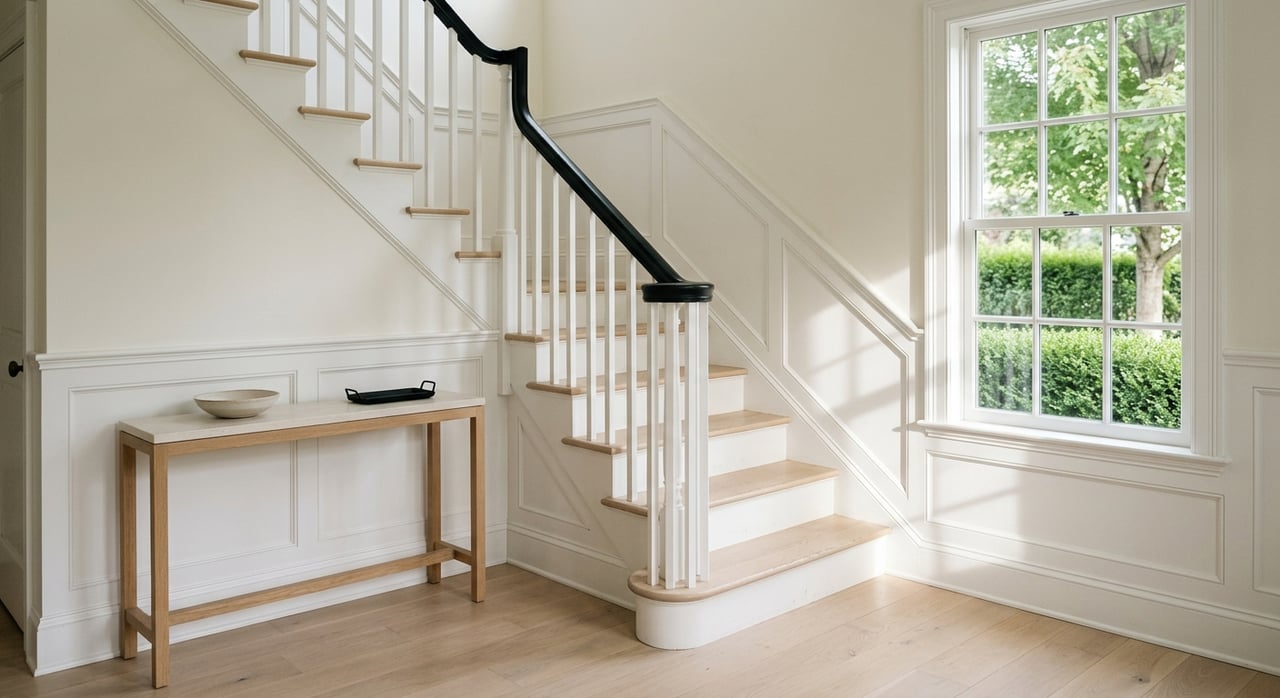
What Luxury Buyers Should Know About Short Hills Homes
July 2, 2026
July 2, 2026
If you are looking at Short Hills, you are not just shopping for square footage. You are buying into one of Northern New Jersey’s most established luxury markets, where commuter convenience, generous lots, and polished homes often come at a real premium. Knowing what drives that premium can help you focus your search, avoid surprises, and make a stronger decision. Let’s dive in.
Short Hills is an unincorporated community within Millburn Township in Essex County, and its appeal is rooted in a long-standing commuter suburb model. Millburn’s official history ties Short Hills to Stewart Hartshorn’s vision for a planned commuter community, and the township master plan notes direct Manhattan access via NJ Transit Midtown Direct in less than 45 minutes from Millburn station.
That mix of access and residential character helps explain why the area stays so desirable. Census data for Short Hills reports a 2020 population of 14,422, an owner-occupied housing rate of 86.5%, median household income above $250,000, and a mean commute time of 42.6 minutes.
For many buyers, the local school district is also part of the decision from day one. Millburn Township Public Schools says it serves about 4,589 students across eight schools, which makes district access part of the broader value conversation for many relocating households.
Short Hills sits firmly in the luxury tier, even compared with other well-known commuter suburbs nearby. Late June 2026 market snapshots show a median sale price of $2.308 million over the three months ending May 2026, according to Redfin, while Realtor.com’s April 2026 market page shows a $2.8 million median listing price, 22 median days on market, and 68 homes for sale.
Those numbers matter because they show both price strength and pace. Sold-price and list-price figures often differ because they measure different windows and different data sets, so it is more useful to read them together than to treat them as conflicting.
Compared with nearby prestige suburbs, Short Hills currently commands a higher asking-price tier. Realtor.com market pages show Summit with a median listing price of $1.45 million and Chatham at $1.495 million, while Short Hills zip code 07078 sits at $2.825 million.
One of the biggest mistakes luxury buyers make is assuming Short Hills has one standard price point. In reality, the market spans a broad range, with meaningful differences in lot size, updates, architecture, and location within the community.
Current inventory in late June 2026 shows homes around $1.45 million, including examples like 44 Wellington Ave and 28 Canterbury Ln. Inventory also includes homes around the upper $1 millions and low $2 millions, such as 137 Hobart Ave at $1.579 million, 596 White Oak Ridge Rd at $2.195 million, and 36 Cambridge Dr at $2.249 million.
At the upper end, listings include 34 Pine Ter at $2.899 million, 148 Great Hills Rd at $3.698 million, 1 Clive Hills Rd at $3.988 million, 15 Sparta Rd at $4.425 million, 6 Grosvenor Rd at $4.699 million, 9 Far Brook Dr at $4.789 million, 330 Hartshorn Dr at $5.195 million, 290 Long Hill Dr at $5.299 million, 18 Deer Path at $5.32 million, and 30 Robert Dr at $5.995 million.
In practical terms, you can think about the market in three rough bands:
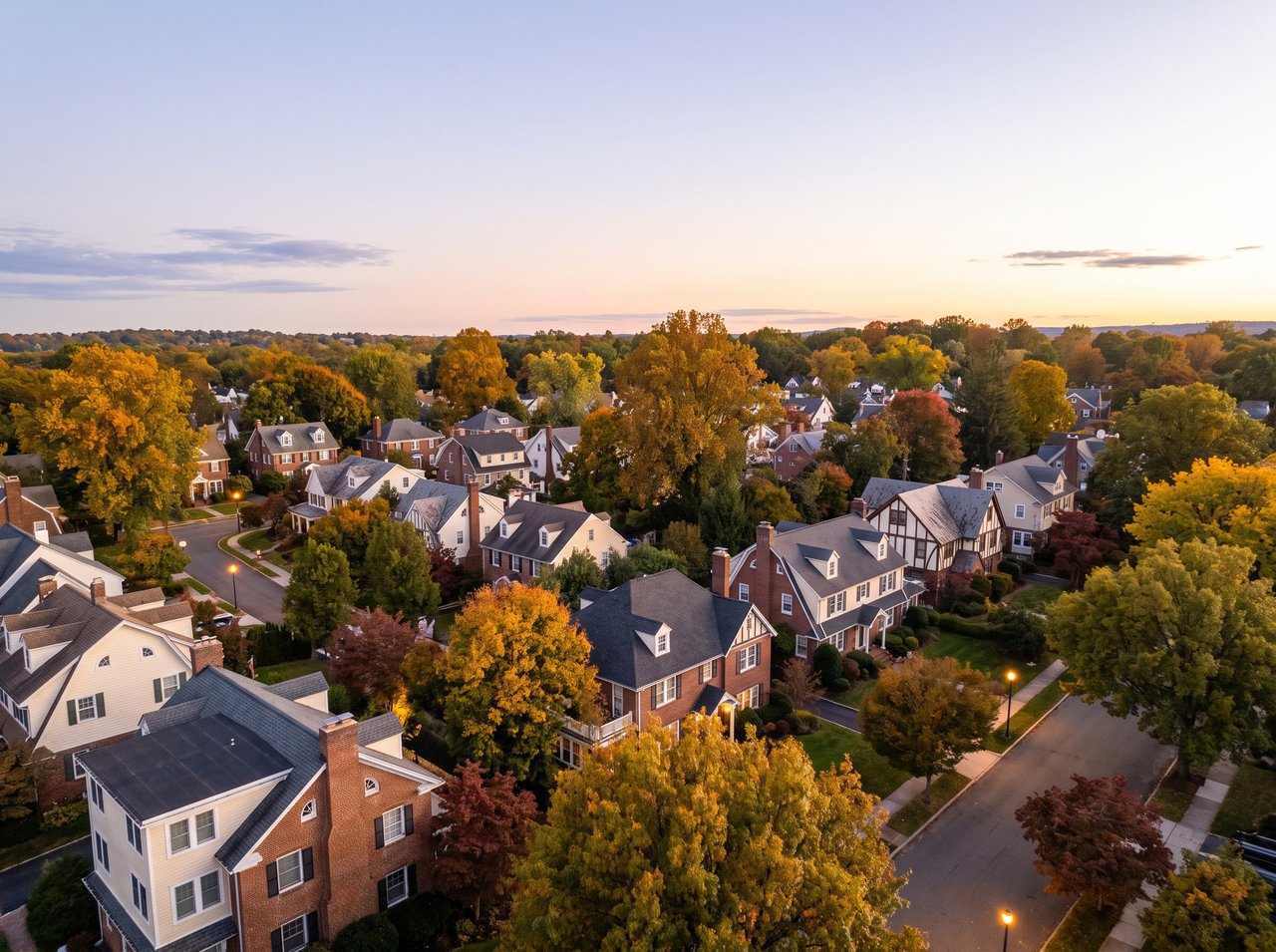
Short Hills is not a one-look market, and that is part of its appeal. Township nomination materials for Woodfield Short Hills Estates describe late-1920s homes in Tudor Revival, Colonial Revival, and Georgian styles on large landscaped parcels.
The Short Hills Village historic report also points to Tudor Revival commercial buildings, a Queen Anne brick train station, and Colonial Revival civic structures. For you as a buyer, that means the housing stock often carries real architectural identity rather than a uniform subdivision feel.
The township master plan adds another important point: the long-established single-family residential districts are essentially fully developed. That helps explain why so much of the market is defined by mature neighborhoods and established homes, rather than waves of brand-new subdivisions.
Luxury in Short Hills is not just about the house itself. It is also about how the home sits on the land, how much privacy you have, and the overall streetscape around you.
Millburn’s master plan identifies minimum lot sizes of 29,000 square feet in R-3, 20,000 square feet in R-4, 14,500 square feet in R-5, and 6,000 square feet in R-6. Current listings show lots around 0.35, 0.46, 0.52, 0.57, 0.66, 0.87, and 1.02 acres.
For many buyers, that translates into certain expectations. You will often see mature trees, deeper setbacks, and landscaped yards that feel more established and private than newer suburban developments.
In many markets, move-in ready can mean a home is clean, functional, and freshly painted. In Short Hills, especially at the top end, buyer expectations are often much higher.
Current inventory includes multiple new-construction and custom-built homes, including 1 Clive Hills Rd, 9 Far Brook Dr, 18 Deer Path, 6 Grosvenor Rd, and 330 Hartshorn Dr. That pattern suggests many turnkey luxury buyers expect a recently built home or a substantial rebuild, not just cosmetic updates.
At the same time, not every attractive option has to be brand new. Homes such as 137 Hobart Ave, 596 White Oak Ridge Rd, and 36 Cambridge Dr show that some lower-priced inventory can still present as polished and functional without reaching estate-scale pricing.
If you love older homes and timeless architecture, Short Hills has real appeal. But if you think you may want to change the exterior, build an addition, or take on a major renovation, you should confirm historic district status early.
The township’s Short Hills Village Historic District was designated to preserve historic character, and the ordinance says requirements are meant to guide repairs, alterations, additions, and replacements so owners do not lose historic integrity. Millburn also has other historic districts, including Short Hills Park and Wyoming.
That does not mean a historic-area purchase is a bad fit. It simply means your renovation goals, timeline, and budget should be evaluated with those rules in mind before you commit.
Short Hills rewards buyers who enter the search with a clear framework. Because inventory spans older architecturally significant homes, polished move-up properties, and newer custom builds, the best choice is not always the most expensive one.
As you compare homes, focus on these questions:
The right answers will help you narrow the market faster and shop with more confidence.
The core value story in Short Hills is powerful. You get commuter access, established residential settings, strong district appeal, and a housing stock that often feels more substantial and distinctive than what you find in many other suburbs.
The tradeoff is that supply is constrained in these mature neighborhoods, and many of the most desirable homes command a premium because they are new construction, major rebuilds, or architecturally significant older properties. For luxury buyers, that usually means paying not just for the home, but for the location, setting, and scarcity.
If you are planning a move into Short Hills, local guidance can make the search much more efficient. The team at Allison Ziefert Real Estate Group can help you understand the differences between price bands, home styles, and property constraints so you can buy with clarity.
Blog
For Northern New Jersey homeowners who want to understand what drives competitive offers, how listing prices influence buyer behavior, and what really determines a suc… Read more
Blog
For homeowners in Maplewood, South Orange, and Northern New Jersey who want to understand their property's value before selling, refinancing, or planning their next mo… Read more
Blog
A step-by-step guide for buyers navigating the post-contract period in Essex, Morris, and Union Counties
Blog
A straight-numbers look for buyers considering a purchase in Maplewood, Montclair, Summit, and surrounding towns — and what the math actually says about timing
Home Selling
A practical guide for buyers and sellers in Maplewood, South Orange, Montclair, Summit, Westfield, Chatham, and nearby Northern New Jersey towns.
We are passionate about researching market stats, negotiating contracts, and helping our clients find and sell homes. The majority of our business comes from past clients and referrals from people who know our work.