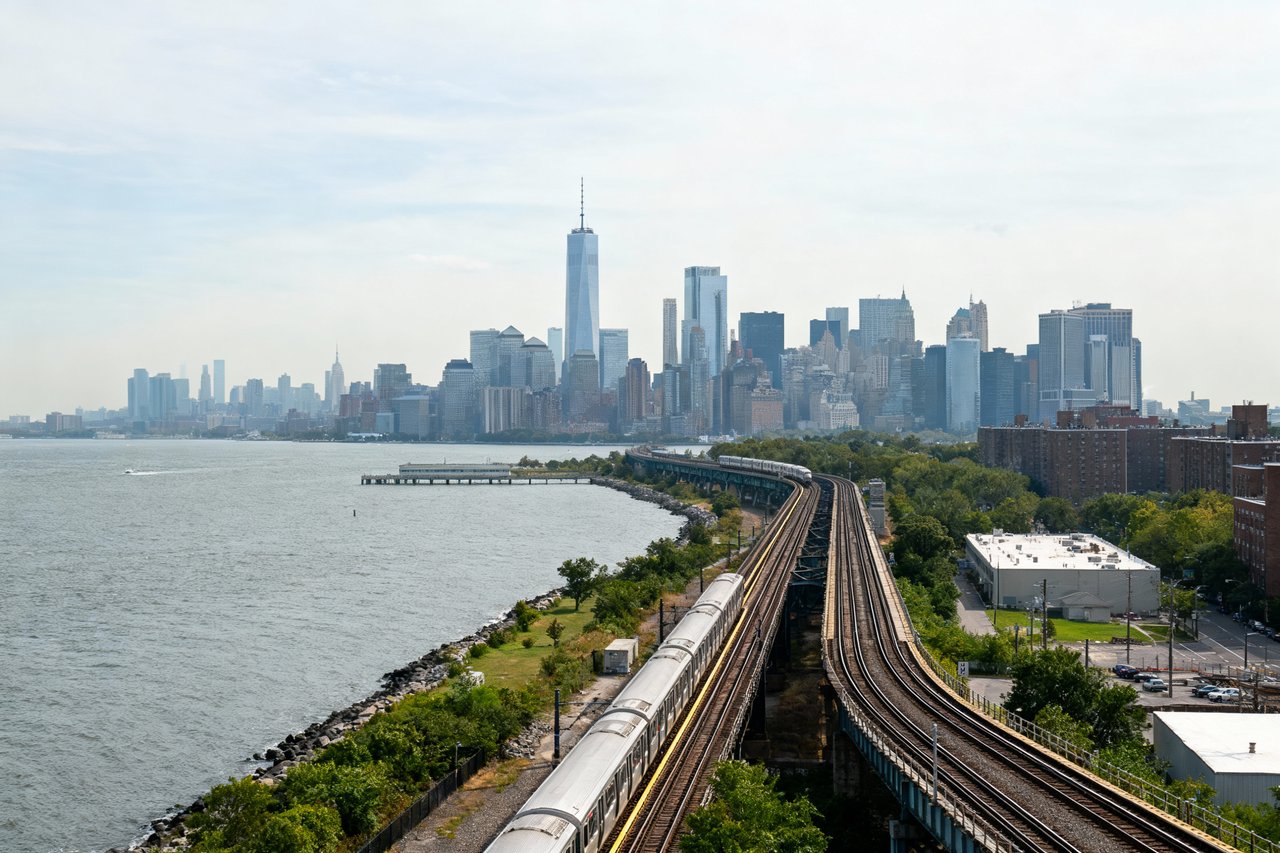
Gateway Tunnel Project and Its Impact on New Jersey Real Estate
Blog February 4, 2026
Blog February 4, 2026
The Gateway Tunnel Project (officially the Hudson Tunnel Project) is the most critical element of the broader Gateway Program, a long-term initiative to modernize rail infrastructure between New Jersey and New York City along the Northeast Corridor.
In practical terms, this project is not about shaving a few minutes off commute times or introducing new amenities. It is about preventing a systemic failure in the rail network that underpins daily commuting patterns, regional employment access, and housing demand across much of Northern New Jersey.
The scope of the Gateway Tunnel Project is conceptually simple but operationally massive.
It includes:
Construction of two new rail tunnels beneath the Hudson River
Full rehabilitation of the existing North River Tunnels, which are more than 115 years old and currently carry nearly all NJ–NYC rail traffic into Penn Station
A phased construction approach designed to keep trains running while repairs and upgrades are completed
This stretch of rail is the busiest passenger corridor in the United States, supporting roughly 450 trains and approximately 200,000 passenger trips each day. While the larger Gateway Program also encompasses bridge replacements, track expansions, and station upgrades, the tunnel work is the system’s linchpin. Without it, the rest of the corridor remains fundamentally constrained.
Current cost estimates are approximately $16 billion, funded through a combination of federal, state, and local sources. Construction began in 2023 and is projected to continue into the 2030s. That said, funding gaps could slow or pause progress as early as 2026 if federal commitments are not fully restored.
The existing tunnels sustained extensive damage during Hurricane Sandy. While temporary remediation allowed them to remain operational, they were never fully restored. As a result, the system now operates with minimal redundancy. If one tunnel is taken out of service, capacity into Manhattan drops sharply.
The Gateway Tunnel Project is intended to:
Prevent a major rail service breakdown between New Jersey and New York City
Increase capacity and reduce chronic bottlenecks for NJ TRANSIT and Amtrak
Improve long-term reliability and scheduling consistency
Add flood protection and climate resiliency to already vulnerable infrastructure
At its core, this is a stability project. Without it, the region remains exposed to risks that would be difficult and costly to absorb.
How the Gateway Tunnel Project Could Affect New Jersey Real Estate
Reliable access to New York City has long been one of the strongest drivers of value in Northern New Jersey real estate. Communities with direct, dependable rail connections consistently outperform comparable towns without them.
If Gateway is completed as planned, improved reliability and increased capacity could reinforce demand in transit-oriented markets such as Maplewood, Montclair, Short Hills and Chatham and other walkable rail hub towns along and near the commuter lines. Buyers and renters tend to price predictability into their decisions, particularly when commuting is a non-negotiable part of daily life.
This pattern already exists across the region and is explored further here:
List of Best NJ Suburbs for New York Commuters
As rail service becomes more reliable, buyer behavior shifts in measurable ways.
Commuters are more willing to live farther from Manhattan if travel times are consistent
Demand increases for homes within walking distance of train stations
Developers and investors place greater emphasis on transit-oriented projects
These trends are not hypothetical. They reflect outcomes seen after other major transit investments.
The Gateway Program is projected to generate substantial long-term economic benefits, including thousands of jobs and sustained increases in regional economic output.
For housing markets, this typically results in:
Higher household incomes over time
Increased municipal revenues
Greater reinvestment in infrastructure, downtowns, and public spaces
The downside risk is not limited to inconvenience.
Without new tunnels:
A failure in the existing system could disrupt rail service for months or longer
Commuters may be pushed back into cars, worsening congestion on already-strained bridges and highways
Confidence in rail-dependent communities could weaken, affecting both buyer demand and pricing
From a real estate perspective, the Gateway Tunnel Project functions as a form of insurance. Its absence introduces uncertainty into markets that rely heavily on commuter confidence and predictable access to New York City.
If completed, the Gateway Tunnel Project represents a long-term structural positive for New Jersey real estate, particularly in communities tied to NYC rail access. It supports stability, predictability, and sustained demand for transit-oriented living.
If significantly delayed or stalled, the region faces meaningful downside risk. Rail reliability is not a secondary concern in Northern New Jersey. It is foundational to how and where people choose to live.
If you’re weighing a move near transit or reassessing a commuter-driven market, reach us at [email protected] for grounded, local guidance.
The Gateway Tunnel Project will build two new rail tunnels under the Hudson River and repair the existing tunnels that connect New Jersey to New York City. Its primary purpose is to prevent major service failures and stabilize the region’s rail network.
Not directly. The main benefit is reliability, not speed. The project is designed to reduce delays, cancellations, and service disruptions rather than shorten travel times.
The current tunnels are over a century old and operate with almost no backup capacity. If one tunnel fails, rail service between New Jersey and Manhattan could be severely disrupted.
Communities with strong rail dependence—particularly walkable towns and station-centered neighborhoods served by NJ Transit—are likely to feel the effects most.
Yes, but as a long-term consideration. Gateway is a structural infrastructure factor, not a short-term market catalyst.
Blog
For Northern New Jersey homeowners who want to understand what drives competitive offers, how listing prices influence buyer behavior, and what really determines a suc… Read more

Blog
For homeowners in Maplewood, South Orange, and Northern New Jersey who want to understand their property's value before selling, refinancing, or planning their next mo… Read more


Blog
A step-by-step guide for buyers navigating the post-contract period in Essex, Morris, and Union Counties



Blog
A straight-numbers look for buyers considering a purchase in Maplewood, Montclair, Summit, and surrounding towns — and what the math actually says about timing

Home Selling
A practical guide for buyers and sellers in Maplewood, South Orange, Montclair, Summit, Westfield, Chatham, and nearby Northern New Jersey towns.
We are passionate about researching market stats, negotiating contracts, and helping our clients find and sell homes. The majority of our business comes from past clients and referrals from people who know our work.