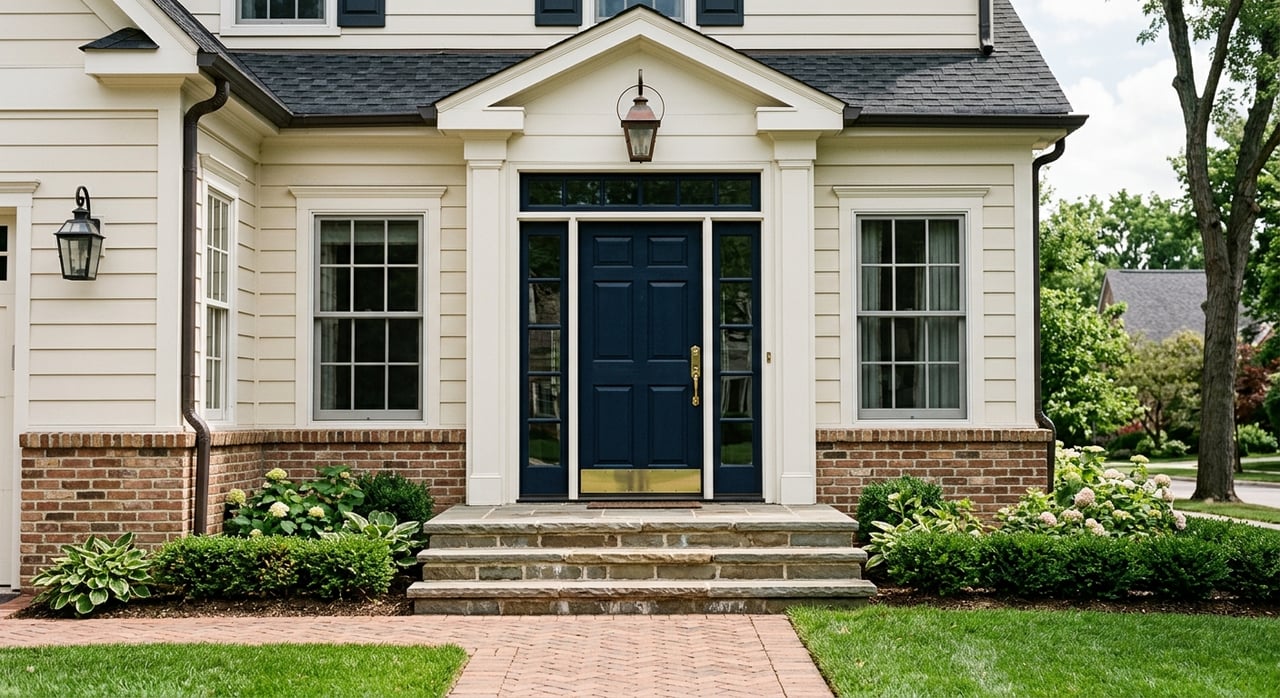
How Maplewood Neighborhoods Differ for Homebuyers
June 18, 2026
June 18, 2026
What feels like the "right" part of Maplewood can change quickly from one block to the next. If you are house hunting here, you are not just choosing a home. You are also choosing a daily routine, a streetscape, and a level of access to the Village, the train, and parking. This guide will help you compare Maplewood neighborhoods in a practical way so you can focus on the areas that best match how you want to live. Let’s dive in.
Maplewood’s residential fabric was largely built out in the 1920s and 1930s, and the township’s planning documents point to a mix of Colonial Revival, Tudor Revival, bungalow, Foursquare, and other revival styles. That history gives the town a lot of visual variety, even within a relatively compact area.
The township also describes Maplewood as balancing revitalization with preservation. In real terms, that means some areas feel closely tied to the Village and transit, while others stand out more for their historic layout, architecture, or quieter setting.
If your top priority is being close to shops, dining, events, and the train, the Village-side neighborhoods usually rise to the top.
That makes the Village core a strong starting point for buyers who want a more walk-first lifestyle. It is often the part of town where daily errands and local activity can happen with less reliance on a car. That said, all of Maplewood's neighborhoods are walkable which is one of the reason so many former city dwellers are drawn to the town.
Maplewood Village is the downtown core. It is described by the Village Alliance as a walkable district of shops, eateries, events, and entertainment, set between residential neighborhoods and Memorial Park, with roughly half a mile of merchants and businesses.
For buyers, that usually means easier access to everyday conveniences and a more active setting. If you picture yourself walking out for coffee, dinner, or a local event, this is often the clearest fit. Housing in the Village itself is primarily rentals above the stores but the residential streets around the Village like Highland, Woodland, Durand, Winthrop and Lenox are coveted.
Maplewood Station sits between Dunnell Road and Maplewood Avenue on NJ TRANSIT’s Morris & Essex line. NJ TRANSIT lists parking, Wi-Fi, and bike racks or lockers at the station.
The township also runs commuter jitneys to and from the station during weekday peak periods for South Orange and Maplewood residents. If your routine depends on rail access, the blocks around the station and Village core can function very differently from homes farther out, even when the map distance looks small. This can often save buyers having to get a second car!
The Memorial Park district includes civic, municipal, and institutional buildings around Memorial Park itself. The township describes the park as a large landscaped suburban park that ties together the municipal building, fire station, police station, library, train station, and other civic landmarks.
For buyers, this is one of the most central parts of Maplewood. It often appeals to people who want a neighborhood feel that is still closely connected to public spaces, civic buildings, and the station area.
The Prospect Street historic district covers an approximately 10-block stretch between Sommer and Parker Avenues. The township describes it as an intact mix of late-19th- and early-20th-century eclectic and revival-style homes.
If you are drawn to older architecture and a strong neighborhood identity, Prospect Street is often a useful reference point. It sits within Maplewood’s earlier suburban development layer, which gives it a distinct historic feel.
Once you move farther from the Village core, Maplewood starts to show more variation in topography, lot patterns, and historic development. These areas may be a better match if you care more about architectural character or a quieter setting than being closest to downtown activity.
This is where buyers often benefit from looking beyond broad neighborhood names and paying attention to street-level differences. The township’s surveys show that block pattern, lot width, and streetscape can shift meaningfully from one micro-area to another.
College Hill sits in the south-center part of Maplewood, between Tuscan Road to the north and Springfield Avenue to the south. The township says the area has a consistent rhythm of lot sizes, setbacks, and building scale, but also notes changes in lot width that create a denser pattern in some sections.
The area also slopes up toward the Watchung ridge. That topography can make College Hill feel different from the flatter core, especially for buyers who notice elevation, street form, and architectural setting.
The Boyden-Burnett district lies southwest of Springfield Avenue and Boyden Avenue and includes the last remaining vestiges of the historic village once known as Middleville, then North Farms, and later Hilton. The township says Springfield Avenue is a busy commercial corridor, while Boyden and Burnett are quieter by comparison.
The district includes vernacular farmhouses along with homes from the early decades of the 20th century. If you want older, more layered housing with a less commercial immediate setting, this is one of the areas worth comparing closely.
The Valley Street historic district extends about eight blocks between Oakview Avenue and Broadview Street and includes properties along Tuscan Road west of Valley Street. The township describes the district as primarily made up of 19th-century houses and mill buildings, with a few 18th-century houses and some early-20th-century homes.
It also notes that the district is not as built up as other parts of town and retains a sense of its agrarian past. For buyers, that can translate into a quieter corridor with a less uniform suburban feel.
The Ridgewood Road survey area includes four roads and is described as a colonial-era thoroughfare with early American houses, later 19th- and 20th-century high-style and vernacular homes, and some houses associated with locally important builders.
The township also points out a distinctive streetscape detail: several houses face due south even though they sit at an angle to the roadway. If you value established architecture and a more picturesque road pattern, Ridgewood Road may stand out.
The best Maplewood neighborhood for you depends on what you want your daily life to look like. A buyer focused on commute convenience may sort the town very differently than someone focused on architectural character or a quieter block.
A simple framework can help narrow your search:
These comparisons are practical inferences based on the township’s planning and preservation descriptions. They are especially helpful when two homes seem similar online but would feel very different once you live there.
In Maplewood, parking can be a real neighborhood differentiator. The township says public-road parking is not allowed between 2 a.m. and 6 a.m. without a permit, and homes with driveways do not qualify for overnight permits.
The township also notes that buyers who need overnight parking may need to rely on municipal lots such as Prospect Street, Yale Street, or Woodland. That means two homes with similar price points and locations may function very differently depending on driveway access, permit eligibility, and distance to station parking or jitney service.
Maplewood is one of those towns where broad neighborhood labels only tell part of the story. The township’s own surveys show meaningful differences in lot rhythm, architecture, street orientation, and access to the Village, station, and parking resources.
If you are buying here, it helps to evaluate Maplewood block by block instead of assuming every central location or historic street will live the same way. When you match your priorities to the right micro-area, you are much more likely to end up with a home that fits both your budget and your routine.
If you want help narrowing down the right part of Maplewood for your move, the Allison Ziefert Real Estate Group can help you compare neighborhoods, commute patterns, and home styles with a local, practical lens.
Real Estate
A seller's guide to commissions, transfer taxes, and the new Graduated Percent Fee for homeowners in Essex, Morris, and Union Counties
Blog
A practical cost guide for buyers purchasing in Essex, Morris, and Union County towns like Maplewood, Summit, Millburn, and Montclair.
Blog
A guide for business owners, investors, and cash buyers exploring non-traditional mortgage strategies in towns like Maplewood, Summit, and Livingston.
Blog
A data-driven breakdown for homeowners and buyers navigating one of Northern New Jersey's most in-demand commuter towns.

Blog
A practical guide for homeowners in Essex, Morris, and Union Counties who are weighing their options before listing.
We are passionate about researching market stats, negotiating contracts, and helping our clients find and sell homes. The majority of our business comes from past clients and referrals from people who know our work.