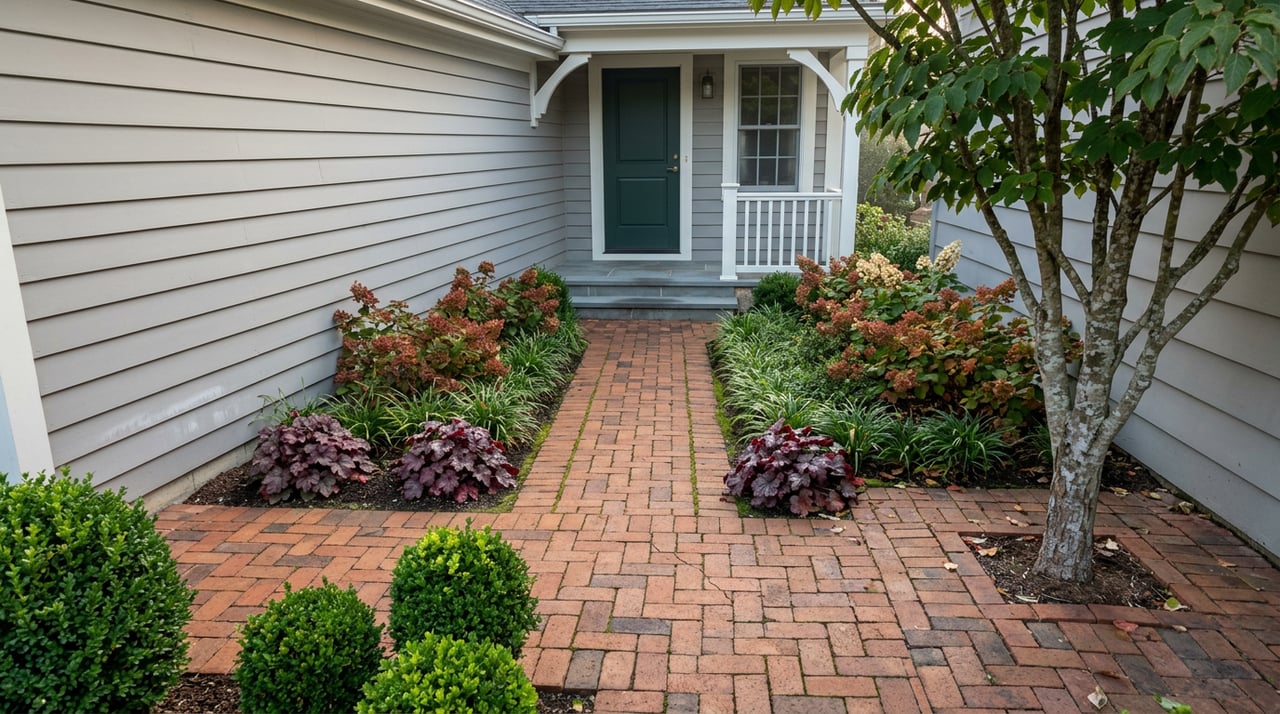
South Orange Has Two Train Stations. Your Commute Depends on Which One You Can Actually Walk To.
August 27, 2026
August 27, 2026
Two buyers toured houses in South Orange on the same Saturday this spring. Both listings used the same line: eight minutes to the train, on foot. Both buyers assumed they were shopping for the same commute. Only one of them was.
That mismatch lives inside a phrase real estate listings treat as a single, interchangeable selling point: walk to the train. South Orange has two NJ Transit stations, not one, and they do not do the same job. If you are comparing addresses here, that difference is worth understanding before you write an offer, not after you have already moved in.
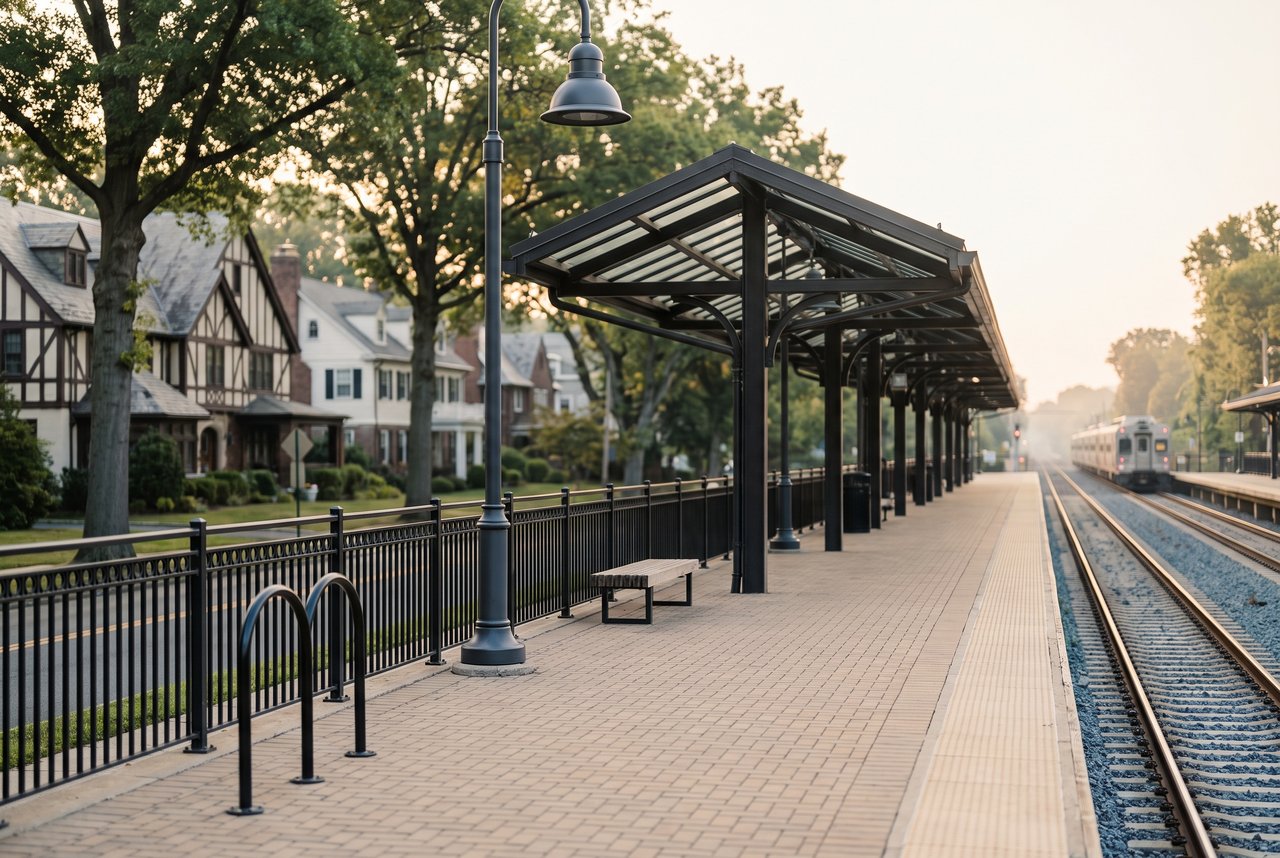
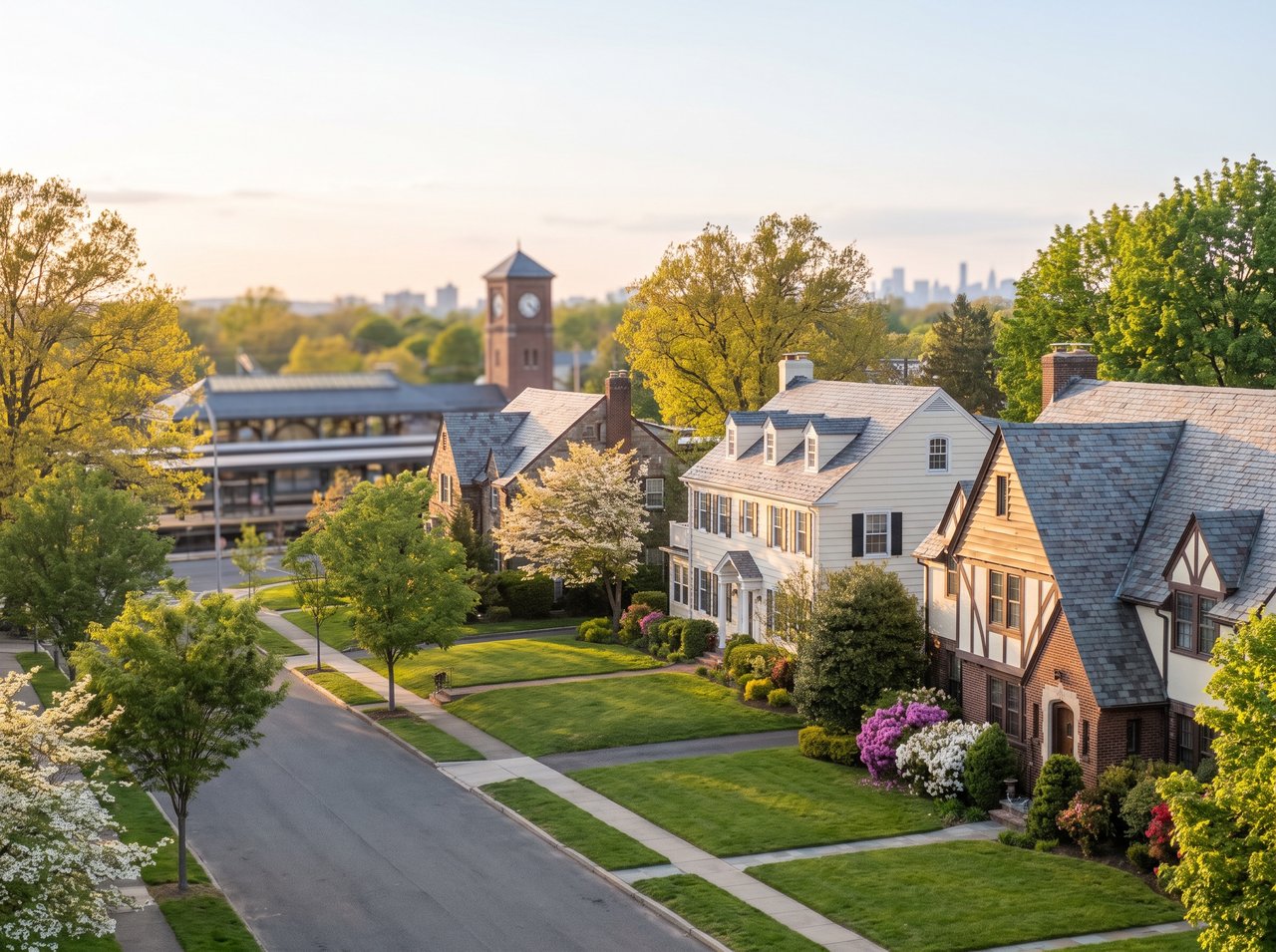
South Orange Station sits on Sloan Street, a block from the South Orange Performing Arts Center and the center of downtown. It opened in 1916, and it is the station every listing photo of a walkable downtown is quietly built around. It sits on NJ Transit's Morris & Essex line and carries Midtown Direct service, the one-seat ride into Penn Station that gives the town most of its commuter appeal.
About a mile north, near Montrose and Vose Avenue, sits Mountain Station. It is actually the older of the two buildings, completed in 1915 and listed on both the New Jersey and National Registers of Historic Places for an unusual piece of engineering history: when the old Lackawanna Railroad rebuilt this stretch of track in the 1910s and 1920s to eliminate grade crossings, Mountain Station was the one place where the roadbed's elevation stayed put, so the crossing at Montrose Avenue was raised onto a bridge instead. It is a real piece of railroad history, sitting on the same physical line as South Orange Station.
But most Midtown Direct trains do not stop there. A rider boarding at Mountain Station typically has to transfer at an intermediate stop to reach Manhattan without a change of trains, rather than riding straight through the way a South Orange Station rider does. A bus does connect the two, the 92 route runs along Scotland Road between them, but that is a second leg on a trip a South Orange Station commuter makes in one.
That is not a minor scheduling footnote. It is the difference between the commute South Orange is known for and a commute that adds a transfer to your day, every day, for as long as you own the house.
You do not have to take my word for the demand gap. The Village's own parking rules already priced it in.
The Third Street Garage, the closest lot to South Orange Station, is reserved for South Orange residents only, Monday through Friday from roughly 5 a.m. to 9:30 a.m., and getting a spot requires proof of residency and a place on a waiting list, according to the town's own permit rules. Permits for the lot near Mountain Station, by contrast, are open to the general public. All you need is a valid New Jersey driver's license and a vehicle registration. No residency proof, no waitlist mentioned.
Nobody set those rules to make a point about the two stations. They are the ordinary result of supply and demand: enough commuters want a guaranteed spot near the station with the direct ride that the town restricts it to residents and still can't keep up. Nobody is fighting over the same certainty near Mountain Station. The permit system is a quiet confession of which station people actually build their mornings around.
For most of the last decade, buyers who wanted a faster, more direct commute could just pay for Maplewood instead, since Maplewood historically carried a real price premium over South Orange. That gap has closed considerably by 2026, which means the old shortcut of comparing towns instead of addresses no longer does the work it used to.
The South Orange market itself has stayed tight all year. Homes sold for an average of $1,148,231 in July 2026, moving at close to 116 percent of list price, with only 13 active listings in town at the end of that month. Year to date through July, South Orange had recorded 106 closed sales, up from 92 over the same stretch the year before, even as inventory stayed thin. Allison Ziefert's own mid-year market check, published in The Village Green in July, described a market that is evolving rather than weakening, with fewer casual buyers but the ones still shopping more motivated to compete for the right house.
That kind of market rewards buyers who compare specific addresses rather than treating the whole town as one product. The two-station question is exactly that kind of comparison. And it is not the only one. South Orange and Maplewood share a school district, but they do not share a tax bill. In 2025, the average South Orange homeowner paid roughly $22,717 in property taxes on a home valued near $879,273, while the average Maplewood homeowner paid about $19,378 on a home valued near $807,155, according to state data reported by Patch. Same school district, same commuter line, different math depending on which side of the town line, and which block, you land on.
If you are comparing two South Orange listings that both mention a walk to the train, the fix does not require an agent. It requires ten minutes and the right tools.
Pull up NJ Transit's schedule pages for South Orange Station and for Mountain Station and look at a normal weekday morning departure board. Count how many trains from each station run straight through to Penn Station without a transfer. Then walk the actual route from the listing address to whichever station it sits closest to, at the time you would really be leaving for work, not the straight-line distance a listing sheet estimates.
A house near Mountain Station is not automatically a mistake. Some buyers prefer the quieter block, or plan to drive to South Orange Station instead of walking, or don't commute into Manhattan at all. But that should be a decision you make on purpose, weighed against the extra time in your week, not something you discover the first Monday you're standing on the platform waiting for a transfer.
It is also worth knowing that South Orange restricts overnight street parking without a permit, and that the Village runs a jitney bus service specifically for residents who commute by train from the outlying neighborhoods, according to the Village's own parking rules. If your plan involves driving to whichever station is closer, confirm what permit options actually exist for that specific lot before you assume you will get a spot.
Does every South Orange listing that says "walk to the train" mean the Midtown Direct station? Not always. Some walkable addresses sit closer to Mountain Station, which shares the same line but sees far less Midtown Direct service. Check which station the listing actually means, then compare weekday departure schedules for both before assuming they're equivalent.
Can a new resident get a parking permit right away near South Orange Station? The Third Street Garage, the lot closest to the downtown station, requires proof of residency and has operated with a waiting list. Confirm current wait times directly with South Orange Village's parking office before you count on a specific spot.
Does living near Mountain Station hurt resale value? The data available doesn't support a blanket answer either way. What it does show is a South Orange market that stayed competitive through 2026, with tight inventory and strong list-to-sale ratios townwide. Which station a home sits nearest is one factor among several buyers weigh, alongside condition, layout, and price. It's worth factoring in on purpose rather than assuming it away.
If you're comparing homes in South Orange and want someone who will walk the actual route with you before you write an offer, not just repeat what the listing sheet says, Allison Ziefert Homes offers a free local market consultation. We'll tell you which platform gets you the direct ride, and which one gets you a transfer.

Real Estate
Blog
A practical guide for anyone considering a move to South Orange — covering train stations, jitney routes, parking, and how to match your commute to the right neighborh… Read more
Blog
For anyone considering a move to Northern NJ, or already here and wondering why the property tax bill hasn't sent them packing yet.
Blog
A mid-2026 status check for anyone buying, selling, or just curious about home values in these two Essex County communities
Blog
A practical seller's guide for homeowners in Essex, Morris, and Union Counties planning to list between September and November
We are passionate about researching market stats, negotiating contracts, and helping our clients find and sell homes. The majority of our business comes from past clients and referrals from people who know our work.