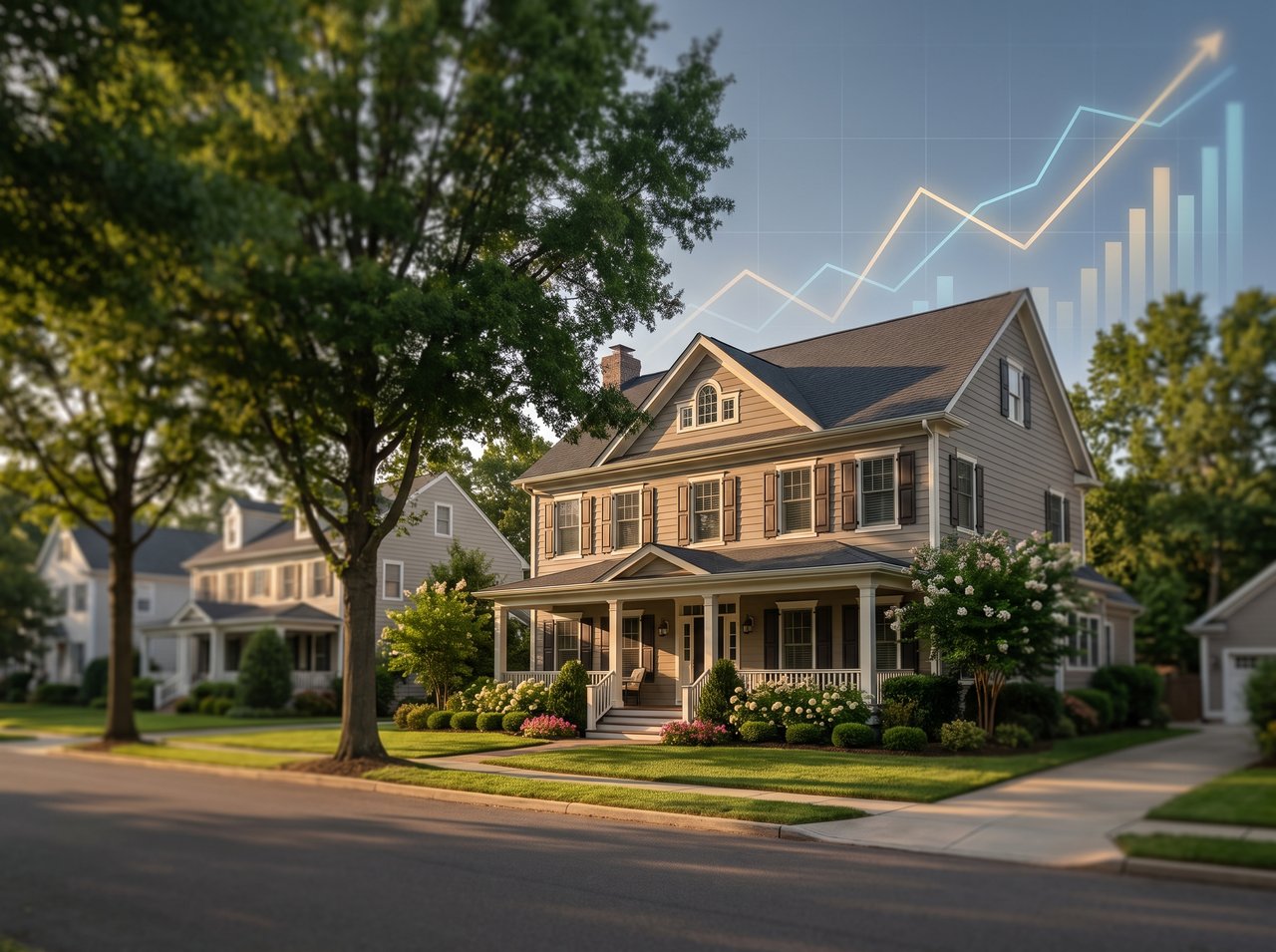
What's Actually Happening in the Maplewood & South Orange, NJ Housing Market Right Now?
Blog Allison Ziefert August 21, 2026
Blog Allison Ziefert August 21, 2026
If you've been trying to piece together what's really going on in the Maplewood and South Orange housing market, here's the short version: it's still moving in favor of sellers. Prices are climbing, well-prepared homes are drawing multiple offers, and available inventory remains thin — even with mortgage rates higher than they were a few years back. National headlines predicting a broad slowdown simply haven't matched what's playing out on the ground in these two towns.
Despite the affordability squeeze from elevated borrowing costs, sale prices across Maplewood and South Orange have kept rising this year, and homes in strong condition are frequently closing above their asking price.
Through June 2026, the average sale price in Maplewood reached $1,238,033 — up 17.7% from the same period a year earlier. South Orange wasn't far behind, posting an average sale price of $1,172,884, up 14.0% year over year. Buyers aren't just meeting list price, either: Maplewood homes have been closing at an average of 116.8% of asking, and South Orange homes at 113.3%, particularly for properties near walkable downtowns, top-rated schools, parks, and NJ Transit stations.
A handful of yard signs on a spring weekend can make the market look wide open, but the actual number of homes trading hands each year here has dropped well below historical norms.
It's a bit like judging how busy a restaurant is by glancing at the parking lot for five minutes instead of watching it over an entire month — a quick impression rarely tells the full story. Even during the busiest weeks of spring, active inventory in each town typically runs somewhere in the 15–20 listing range townwide, not the hundreds it can feel like from a weekend drive.
The longer-term volume numbers make the picture clearer. Maplewood regularly saw close to 400 home sales a year during the mid-2000s and again through the pandemic-era boom. In 2025, that figure was 256. Through the first half of 2026, only 103 homes have sold, putting the town on pace for another comparatively low-volume year. South Orange has followed a similar path: annual sales that once approached 300 fell to 158 in 2025, and just 80 homes had closed by June 2026.
Why inventory has stayed so tight:
Some sellers notice smaller crowds at showings compared to the height of the pandemic-era rush and assume interest has cooled. In our experience, that's rarely the real story — today's buyers tend to be fewer in number but far more serious.
That urgency shows up in the numbers: homes in Maplewood are spending an average of just 17 days on market before going under contract, and South Orange homes about 24 days. The people touring homes right now have usually already done their research, gotten pre-approved, and narrowed down exactly what they're looking for. Sellers sometimes worry when open house traffic looks modest, only to find themselves fielding several strong offers within a week or two of listing.
Buyers aren't just purchasing square footage — they're buying walkable downtowns, a one-seat Midtown Direct ride into Manhattan, well-regarded schools, mature tree-lined streets, and a strong sense of community.
Not every buyer in these towns is shopping the same market, though. Someone touring a turnkey Colonial or Tudor near downtown Maplewood is often in a completely different price tier than a buyer eyeing a starter condo near Seton Hall University or a fixer-upper that needs updating — which is part of why sweeping statements about "the market" rarely hold up to scrutiny. That said, the overall pull is real: buyers continue relocating from Brooklyn, Manhattan, Jersey City, and Hoboken in search of more space without giving up an easy commute. When they can't find the right fit in Maplewood or South Orange, they'll often widen their search to neighboring Montclair, Glen Ridge, Bloomfield, West Orange, or Livingston. Others comparison-shop against Millburn, Short Hills, Summit, Westfield, Madison, Chatham, or Morristown — towns across Essex, Union, and Morris counties offering a similar blend of commuter rail access, strong schools, and established downtowns.
Homeowners who've been in Maplewood or South Orange for a decade or more are often stunned by how much value their homes have gained, even if they haven't been watching the market closely.
In 2015, the average sale price in Maplewood was $544,000. By 2025, it had climbed to $1,002,000 — an increase of roughly 84%. South Orange tells a similar story, rising from $622,000 in 2015 to $1,056,000 in 2025, up about 70%. For many long-term owners, their house has quietly become one of the best-performing assets they hold — one more reason so many residents aren't in a rush to sell unless a life change gives them a reason to.
For buyers:
For sellers:
Read more: Getting a home ready to compete doesn't have to wait until spring. Our guide to preparing a Northern NJ home for a fall sale walks through exterior touch-ups, heating-system prep, and staging moves that matter most once the season turns.
The fundamentals in Maplewood and South Orange haven't shifted as much as national coverage might suggest. Demand remains healthy, inventory remains limited, and homes that are priced and presented well continue to outperform. Whether you're weighing a move into the area, thinking about selling, or just trying to understand what your home might be worth today, local context and current data matter more than any national headline.
If you'd like a personalized read on your specific situation, reach out to Allison Ziefert Real Estate Group at [email protected]. We track this market every day, not just when the quarterly reports come out.
Is it still a good time to buy in Maplewood or South Orange? It depends on your timeline and goals, but buyer competition for well-located, move-in-ready homes remains strong — homes are averaging 17 to 24 days on market — so it helps to be pre-approved and ready to move quickly.
Why does inventory feel so low in these towns right now? Many owners locked in low mortgage rates a few years ago and aren't eager to give them up, while others simply aren't in a hurry to leave neighborhoods they're attached to. Active inventory townwide typically sits around 15–20 listings, well below historical norms.
How quickly are homes selling in Maplewood and South Orange? Through mid-2026, Maplewood homes have averaged about 17 days on market before going under contract; South Orange homes about 24 days.
Should I wait for mortgage rates to drop before buying? That's a personal decision, but waiting can mean facing even more competition if rates fall and more buyers re-enter the market at once. It's worth weighing against your specific budget and timeline.
Is my home worth more than I think? Quite possibly. Maplewood's average sale price has climbed roughly 84% since 2015, and South Orange's about 70% over the same period. A local, current valuation is the only way to know exactly where your home stands.

Blog
A straight-numbers look for buyers considering a purchase in Maplewood, Montclair, Summit, and surrounding towns — and what the math actually says about timing
Home Selling
A practical guide for buyers and sellers in Maplewood, South Orange, Montclair, Summit, Westfield, Chatham, and nearby Northern New Jersey towns.
Real Estate
Blog
A practical guide for anyone considering a move to South Orange — covering train stations, jitney routes, parking, and how to match your commute to the right neighborh… Read more
Blog
For anyone considering a move to Northern NJ, or already here and wondering why the property tax bill hasn't sent them packing yet.
We are passionate about researching market stats, negotiating contracts, and helping our clients find and sell homes. The majority of our business comes from past clients and referrals from people who know our work.