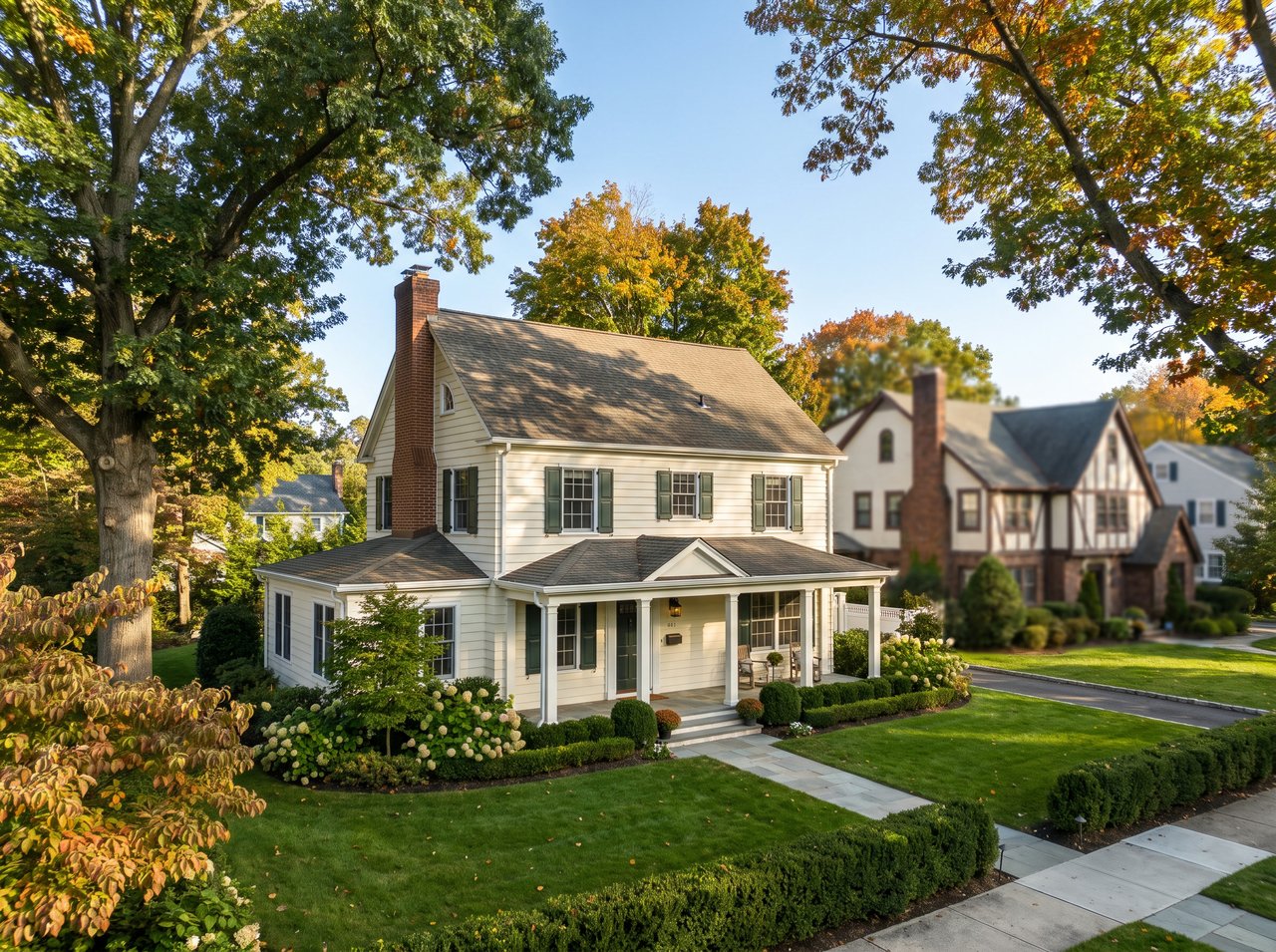
Why Do Some Homes Sell Above Asking Price in Maplewood and South Orange, NJ?
Blog Allison Ziefert October 22, 2026
Blog Allison Ziefert October 22, 2026
For Northern New Jersey homeowners who want to understand what drives competitive offers, how listing prices influence buyer behavior, and what really determines a successful sale.
A home goes on the market in Maplewood. The open house draws steady traffic, buyers return for second showings, and competing offers push the final price above asking.
Meanwhile, another property nearby receives plenty of online views but little serious interest.
What's creating the difference?
Homes sell above asking price when buyer demand, property appeal, pricing strategy, and available competition come together. But there's an important distinction: selling above the asking price doesn't necessarily mean selling above market value.
For homeowners in Maplewood and South Orange, understanding that difference is essential to making informed pricing decisions.
Not necessarily. The asking price is a marketing decision made before a property is offered for sale. Market value reflects what buyers are willing to pay under current conditions.
A seller may choose a competitive list price to attract a broader audience, particularly when comparable homes are in short supply. If several qualified purchasers pursue the same property, their offers may exceed that initial figure.
That doesn't automatically mean the property sold for more than its underlying market value.
The more meaningful comparison is between the final sale price and recent transactions involving genuinely similar homes.
This is particularly relevant in Maplewood and South Orange, where older Colonials, Tudors, Victorians, and renovated properties can differ substantially in condition, layout, and location.
A dramatic sale-to-list difference may attract attention, but it doesn't tell the entire story of a transaction.
Limited inventory can intensify competition when several purchasers are looking for the same type of property.
The Allison Ziefert Real Estate Group's published market reporting for 2026 describes continued buyer competition and limited housing availability across Maplewood and South Orange. Well-presented properties have continued to attract interest despite the affordability challenges created by mortgage rates. (njfromatoz.com)
However, that competition isn't distributed evenly.
A renovated Colonial near Maplewood Village may appeal to buyers seeking walkability, restaurants, and convenient access to the Midtown Direct train.
A property in Maplewood's Hilton neighborhood may attract a different group of purchasers who prioritize neighborhood affordability and the home's overall value relative to their alternatives.
South Orange presents equally important distinctions.
Homes near South Orange Village offer convenient access to downtown amenities and the main commuter station. Properties in Newstead or Montrose may appeal to buyers who prioritize larger lots, distinctive architecture, or quieter residential settings. A renovated home in Tuxedo Park may be a great value to a buyer who is prioritizing condition over location.
The takeaway: Buyer demand is highly specific. A strong townwide market doesn't guarantee identical results for every home.
Read more: Our Maplewood and South Orange housing market update explores how inventory, pricing trends, and buyer activity have shaped the local market in 2026.
A thoughtful asking price can encourage more qualified buyers to consider a property. An unrealistic price may narrow that audience before the home has an opportunity to generate meaningful interest.
The strategy begins with understanding how buyers search.
Purchasers typically compare properties within defined price ranges, evaluating condition, location, square footage, and recent sales before deciding which homes deserve a showing.
When a listing appears competitively positioned against available alternatives, more buyers may see it as an opportunity worth pursuing.
That can increase the possibility of competing offers.
However, pricing below an estimated market value does not guarantee a bidding war.
A seller who prices too aggressively may attract attention without generating offers that support the desired result.
Likewise, setting an ambitious price because neighboring properties recently sold above asking can be counterproductive.
A strong pricing strategy should consider the following:
At the Allison Ziefert Real Estate Group, our approach is to evaluate how a property compares with the alternatives buyers are actually considering, rather than relying on a townwide average.
The objective isn't simply to produce an impressive sale-to-list percentage. It's to position the property for the strongest supportable outcome.
Presentation influences more than a buyer's initial impression. It also affects how much uncertainty they associate with purchasing a property.
Consider two similarly sized South Orange homes.
One has refreshed hardwood floors, updated lighting, documented maintenance, and rooms that feel bright and functional.
The other has an appealing layout but visible deferred maintenance and several projects that a new owner would need to address.
Both properties may attract interest, but buyers can evaluate the financial commitment very differently.
In older Northern NJ housing stock, this distinction matters.
Buyers evaluating homes in Maplewood, Montclair, and Glen Ridge may appreciate original millwork, fireplaces, and historic architectural details. They may also carefully consider roof condition, drainage, electrical systems, and the age of major mechanical components.
Addressing appropriate maintenance concerns before listing can reduce uncertainty and help purchasers make more confident offers.
But not every improvement produces a meaningful return.
A seller may benefit more from repairing a recurring basement moisture issue or improving the presentation of original hardwood floors than undertaking an expensive renovation that buyers may not value equally.
Read more: Before investing in improvements, explore our guide to preparing a Maplewood or South Orange home for sale, which explains how to prioritize meaningful updates without unnecessary renovations.
An actual local transaction can illustrate how buyer competition affects the final sale price, but it cannot establish a pricing formula for every property.
In a previously published NJ From A to Z guide for Maplewood buyers, the team highlighted a home in the Hilton neighborhood that attracted multiple offers and ultimately sold above its original asking price. (njfromatoz.com)
That example demonstrates how strong interest in an available property can change the outcome of a sale.
What it doesn't establish is whether the final price exceeded the home's independent market value or whether another listing strategy would have produced a different result.
Those questions require reviewing the comparable sales, property condition, marketing history, and actual offer activity.
For homeowners, this distinction is important.
A successful sale should be evaluated by its overall outcome, not simply by how far the closing price exceeded the original listing price.
No. The strongest offer isn't necessarily the one with the highest purchase price. Financing, contingencies, closing flexibility, and the buyer's ability to complete the transaction can influence which proposal is most attractive.
Imagine a seller receiving competing offers on a Maplewood Colonial.
One buyer offers more but has limited funds available if the appraisal comes in below the agreed price.
Another buyer offers slightly less but has well-documented financing, greater flexibility regarding the closing date, and a stronger ability to address a potential appraisal difference.
The seller may reasonably prefer the second proposal.
Important considerations include the buyer's mortgage approval status, available funds, inspection provisions, appraisal exposure, deposit terms, and requested closing date.
These factors should be reviewed together with the proposed price.
For a homeowner purchasing another property after selling, timing can be especially important.
A buyer willing to accommodate the seller's preferred closing schedule may offer practical value that isn't reflected in the headline purchase price.
Read more: Even after an offer is accepted, several important steps remain. explains attorney review, inspections, appraisal, mortgage commitment, and closing.
The most useful measure of success is how well the completed transaction supports the seller's financial and personal goals.
A final selling price matters, but so do the costs, risks, and conditions associated with achieving it.
For example, a higher purchase price accompanied by extensive repair credits or prolonged negotiations may produce a less attractive net result than the original offer suggested.
Before listing, sellers should understand their likely net proceeds, including applicable transfer fees, negotiated commissions, legal expenses, preparation costs, and other transaction-specific obligations.
It's equally important to evaluate whether the selected buyer can reasonably complete the transaction under the agreed terms.
Read more: If you're determining what your home may be worth before selling, our guide to tax assessments, appraisals, and comparative market analyses explains how different valuations influence pricing decisions in Maplewood and South Orange.
Yes, although the factors influencing competition differ across local markets.
For buyers comparing Bloomfield and West Orange, the appeal may involve differences in available housing styles, property condition, and transportation options.
In Millburn, Short Hills, and Livingston, buyers may evaluate properties against a different set of comparable homes and expectations.
Summit, Chatham, Madison, and Westfield have their own combinations of commuter access, downtown amenities, and residential housing stock.
The same principle applies in Morristown, where downtown lifestyle and property type can create distinct buyer audiences.
These differences reinforce why a successful strategy in South Orange cannot simply be copied to another town, or even applied without adjustment to a different neighborhood within the same municipality.
Local pricing requires local evidence.
For sellers: A strong sale begins with understanding the property's competitive position. Evaluate recent transactions, prepare the home thoughtfully, and establish a listing strategy that reflects what today's buyers value. When offers arrive, assess the full terms rather than focusing exclusively on the highest number.
For buyers: Don't assume a property is overpriced simply because it sells above asking. Compare the agreed price with relevant transactions, consider the home's condition, and understand the financial implications of your offer.
The central lesson is simple: The difference between asking price and selling price is only one part of the story.
A successful transaction depends on informed pricing, genuine buyer demand, thoughtful preparation, and an agreement that can successfully reach closing.
Every home has its own competitive advantages, and understanding them before listing can make a meaningful difference in your selling strategy.
The Allison Ziefert Real Estate Group helps homeowners throughout Maplewood, South Orange, and Northern New Jersey evaluate their properties, understand buyer expectations, and develop pricing and marketing strategies tailored to current conditions.
Whether you're preparing to sell soon or simply curious about your home's market position, we're happy to share our perspective.
Contact us at [email protected] for a complimentary, personalized market analysis.
Why do some Maplewood homes sell above asking price? Competition can develop when a desirable property is priced attractively relative to comparable homes and several qualified buyers are actively searching. Condition, location, available inventory, and marketing exposure can all influence the result.
Should I list my South Orange home below market value to encourage multiple offers? Not automatically. A competitive asking price may attract interest, but deliberately underpricing a property doesn't guarantee competing offers or a better financial outcome. The strategy should reflect comparable sales and your property's specific circumstances.
Does staging help a Northern NJ home sell for more? Effective staging can improve presentation and help buyers understand a property's layout and functionality. However, it doesn't guarantee a higher selling price, and its value depends on the home's existing condition and buyer expectations.
Can a seller choose a lower offer over a higher one in New Jersey? Generally, yes. Sellers can consider financing, contingencies, timing, and the likelihood of closing when evaluating offers, subject to applicable laws and contractual obligations. The highest price isn't necessarily the strongest overall proposal.
Does selling above asking mean my home's market value increased? Not necessarily. The original asking price is a marketing figure, while the completed sale reflects an agreement reached under particular market conditions. Recent comparable transactions offer better context for evaluating market value.
Blog
For Northern New Jersey homeowners who want to understand what drives competitive offers, how listing prices influence buyer behavior, and what really determines a suc… Read more
Blog
For homeowners in Maplewood, South Orange, and Northern New Jersey who want to understand their property's value before selling, refinancing, or planning their next mo… Read more

Blog
A step-by-step guide for buyers navigating the post-contract period in Essex, Morris, and Union Counties

Blog
A straight-numbers look for buyers considering a purchase in Maplewood, Montclair, Summit, and surrounding towns — and what the math actually says about timing
Home Selling
A practical guide for buyers and sellers in Maplewood, South Orange, Montclair, Summit, Westfield, Chatham, and nearby Northern New Jersey towns.
We are passionate about researching market stats, negotiating contracts, and helping our clients find and sell homes. The majority of our business comes from past clients and referrals from people who know our work.