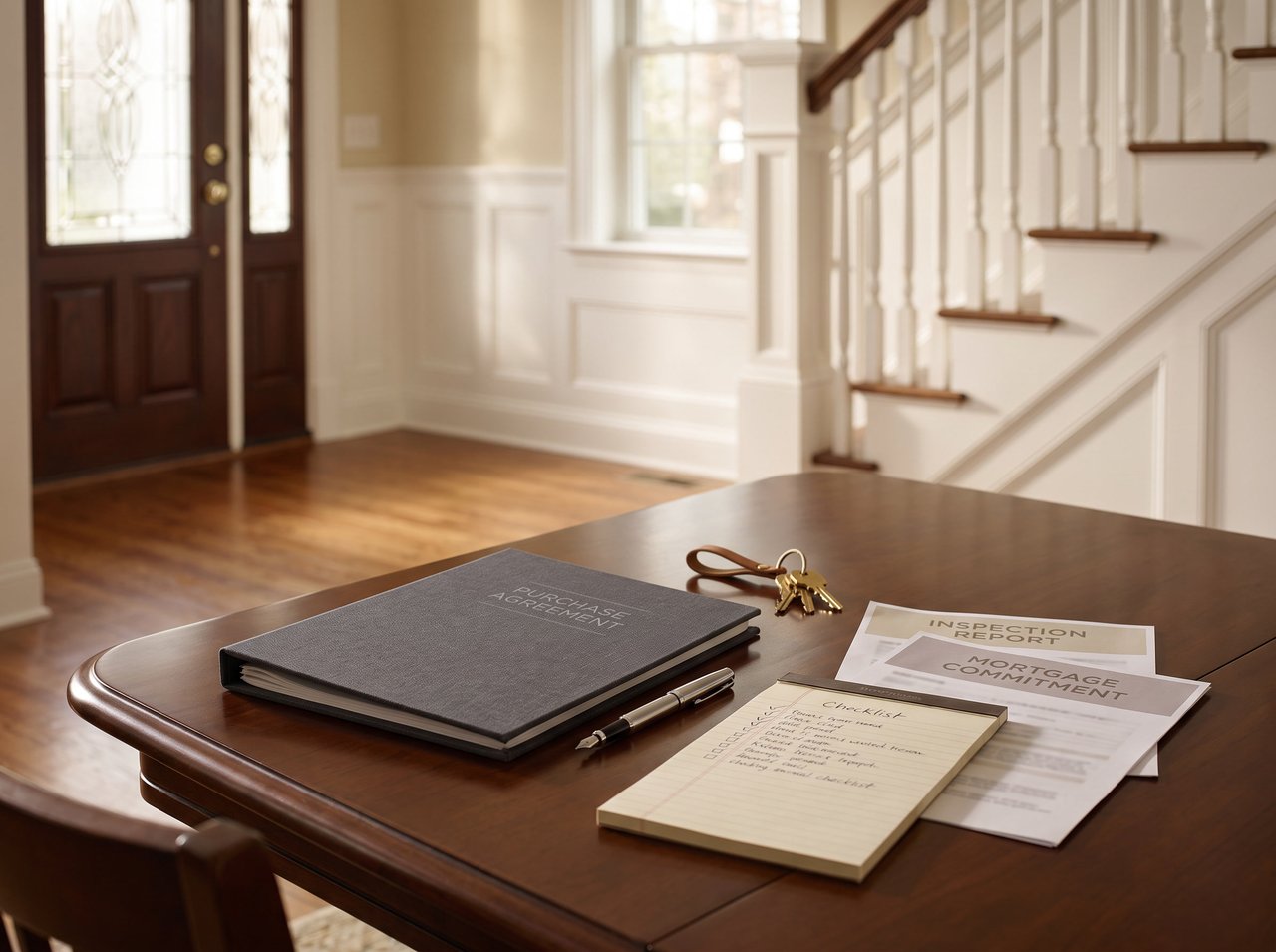
What Happens After Your Offer Is Accepted in Northern NJ?
Blog Allison Ziefert October 11, 2026
Blog Allison Ziefert October 11, 2026
Getting an offer accepted in Northern New Jersey is a genuine achievement — especially in markets where well-priced homes in Maplewood, Montclair, and Summit can draw multiple offers within days of listing. But acceptance isn’t closing. Between the signed contract and the keys in your hand, there’s a structured process that every buyer needs to understand before it starts, not after something unexpected comes up.
Here’s what the post-contract period actually looks like in New Jersey, phase by phase.
In New Jersey, residential real estate contracts include a mandatory attorney review period. This begins the first business day after all parties have signed the contract and typically runs for three business days, though it can extend longer by mutual agreement.
During this window, both the buyer’s attorney and the seller’s attorney review the contract and may propose modifications — to language, terms, contingencies, closing date, or other provisions. Either party can also disapprove the contract entirely during attorney review, which effectively voids the deal without penalty.
This is not a formality. Attorney review is when your legal representation actually negotiates the contract you’ll be bound by. Having an attorney lined up before your offer is accepted — not scrambling to find one after — is one of the most important things a buyer can do in this market.
Once attorney review concludes without either party disapproving, the contract becomes legally binding.
Immediately after attorney review closes, the inspection period begins. In Northern NJ, buyers typically have a negotiated window — commonly around 10 to 14 days from the contract date, though the exact timeline is set in your specific agreement — to complete due diligence inspections.
For most homes in Essex, Morris, and Union Counties, a thorough inspection process goes well beyond the standard home inspection. Depending on the property, buyers commonly add:
After inspections are complete, buyers typically have the opportunity to request repairs, credits, or price adjustments based on findings. This negotiation phase can be straightforward or involved depending on what the inspections surface. Your attorney handles the formal back-and-forth, but your agent’s experience with how sellers in a given market tend to respond to inspection requests shapes the strategy.
Read more: Not sure what each inspection type costs or which ones your property actually needs? This guide to home inspection costs in Essex, Morris, and Union Counties breaks down every line item buyers commonly run in this market.
If you’re financing the purchase, your lender needs to be moving in parallel with inspections — not waiting until they’re done. Most purchase contracts specify a mortgage contingency deadline, typically several weeks after the contract date, by which you need to have a loan commitment in hand.
Your lender will order an appraisal once the contract is signed, which typically takes one to three weeks depending on appraiser availability and the complexity of the property. The appraisal determines whether the home’s market value supports the purchase price in the lender’s view. In Northern NJ markets where homes frequently sell above asking price, appraisal gaps — where the appraised value comes in below the contract price — are a real possibility buyers should be prepared for before they’re in contract, not after.
If the appraisal comes in low, your options typically include: renegotiating the price with the seller, making up the difference in cash between the appraised value and the purchase price, or — if your contract includes an appraisal contingency — potentially walking away. Your attorney and agent will advise on the best path based on your specific contract terms and financial position.
Alongside the appraisal, your lender will be processing your full mortgage application: verifying income, assets, employment, and credit, and working through underwriting. Respond to any document requests from your lender quickly — delays in underwriting are one of the most common causes of closing postponements in this market.
The mortgage commitment letter is your lender’s formal written confirmation that your loan has been approved, subject to final conditions. Receiving this letter by the deadline in your contract is critical — missing the mortgage contingency deadline without an extension in place can put your deposit at risk.
Common conditions attached to a mortgage commitment include:
Once commitment is received and all conditions are satisfied, you’re in the final stretch.
While your mortgage is being processed, your attorney will be conducting a title search — reviewing public records to confirm the seller has clear ownership of the property and identifying any liens, easements, or encumbrances that need to be resolved before closing. In New Jersey, this process is handled through the real estate attorney rather than a separate title company, though title insurance is still obtained and typically required by your lender.
You’ll also need to arrange homeowner’s insurance before closing. Your lender will require proof of a policy in place — binders from your insurer are typically submitted as part of the closing package.
Shortly before closing — usually within 24 to 48 hours — buyers conduct a final walk-through of the property. This is not a second inspection. It’s a confirmation that:
If something is off, your attorney needs to know immediately — before you sit down at the closing table.
Closing in New Jersey is typically an in-person meeting attended by the buyer, the buyer’s attorney, the seller’s attorney, and a representative of the title company or closing agent. Your lender may or may not be present depending on how the transaction is structured.
Before closing, your attorney will send you a closing disclosure outlining all final costs — the amount you need to wire, the breakdown of closing costs, and your final loan terms. Review this carefully and ask questions before closing day. Funds are typically wired the day before or the morning of closing.
At the table, you’ll sign a significant volume of documents — loan paperwork, title documents, transfer documents, and once everything is executed and recorded, the keys transfer to you.
Read more: Want to understand exactly what closing costs you’ll be responsible for as a buyer, and how to estimate the cash you’ll need at the table? This breakdown of seller closing costs in Northern NJ covers the seller side in detail, and your agent can walk you through the buyer-side equivalent for your specific transaction.
The post-contract period in Northern New Jersey typically runs six to eight weeks from signed contract to closing, though it can be shorter for cash purchases or longer if complications arise. The buyers who navigate it most smoothly are the ones who have their team in place before the offer is accepted — attorney, lender, and agent working in coordination, and who stay responsive throughout the process.
Don’t treat acceptance as the finish line. Treat it as the starting gate for a structured, time-sensitive process where your decisions in the first two weeks set the tone for everything that follows.
Understanding the buyer’s post-contract timeline helps sellers manage their own expectations and obligations. Inspection negotiations, appraisal outcomes, and mortgage commitment timelines all have seller implications, and sellers who stay engaged with their attorney and agent throughout the process are better positioned to navigate any complications that arise without losing the deal.
Whether you’re about to submit an offer or already under contract and trying to understand what’s coming next, the Allison Ziefert Real Estate Group can walk you through every phase, and make sure you have the right attorneys, lenders, and inspectors lined up before you need them.
Reach out at [email protected] with any questions about where you are in the process.
How long does it take to close on a home in New Jersey after an offer is accepted? The typical timeline from signed contract to closing in Northern NJ runs approximately six to eight weeks, assuming no major complications. Cash purchases can close faster; transactions involving appraisal issues, inspection negotiations, or underwriting delays may take longer.
What is attorney review in New Jersey and how long does it last? Attorney review is a period — during the three business days from the day after contract signing — during which both parties’ can either accept the contract with no changes or their attorneys can review, modify, or disapprove the contract. Typically the period extends for a bit longer than three days one the attorneys get going. Typically 5+/- business days is to be expected if things go smoothly. . Either party can void the deal during this window without penalty. Once attorney review concludes without disapproval, the contract becomes binding.
What inspections should I get after my offer is accepted in Northern NJ? At minimum, a general home inspection and radon test. Depending on the property, buyers in this region commonly add a sewer line scope, oil tank sweep, chimney inspection, and termite/WDI inspection. Older homes in towns like Glen Ridge, Bloomfield, and West Orange often warrant more thorough due diligence than newer construction.
What happens if the appraisal comes in below the purchase price? You typically have three options: negotiate a price reduction with the seller, pay the difference between the appraised value and the contract price in cash, or — if your contract includes an appraisal contingency — potentially exit the deal. Your attorney and agent will advise based on your specific contract terms and market position.
What do I need to bring to closing in New Jersey? Government-issued photo ID, any certified funds or wire confirmation for your closing costs, and proof of homeowner’s insurance. Your attorney will send you a full closing disclosure in advance outlining exactly what’s needed and how much to bring.
Blog
For Northern New Jersey homeowners who want to understand what drives competitive offers, how listing prices influence buyer behavior, and what really determines a suc… Read more
Blog
For homeowners in Maplewood, South Orange, and Northern New Jersey who want to understand their property's value before selling, refinancing, or planning their next mo… Read more
Blog
A step-by-step guide for buyers navigating the post-contract period in Essex, Morris, and Union Counties


Blog
A straight-numbers look for buyers considering a purchase in Maplewood, Montclair, Summit, and surrounding towns — and what the math actually says about timing
Home Selling
A practical guide for buyers and sellers in Maplewood, South Orange, Montclair, Summit, Westfield, Chatham, and nearby Northern New Jersey towns.
We are passionate about researching market stats, negotiating contracts, and helping our clients find and sell homes. The majority of our business comes from past clients and referrals from people who know our work.